ABDM-Ready Hospital Management Software in India: 2026 Guide
ABDM-ready hospital management software India: a 2026 guide to EMR, OPD, IPD, billing, pharmacy, security and choosing CliniqWise for Indian hospitals.
Quick Answer
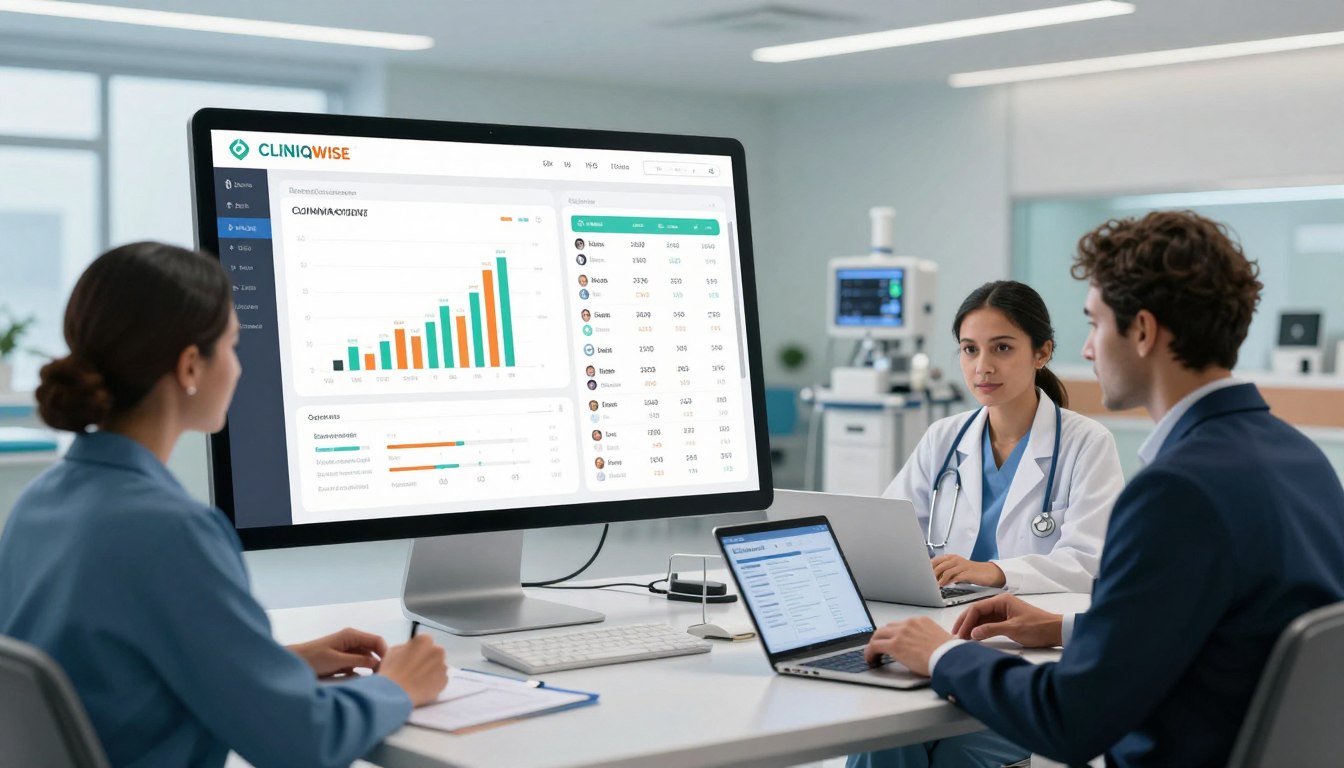
ABDM-ready hospital management software in India is an HMIS designed to support digital healthcare workflows and integration with the Ayushman Bharat Digital Mission (ABDM). Hospitals should evaluate ABDM/ABHA workflows, EMR/EHR, OPD, IPD, billing, pharmacy, laboratory, inventory, reporting, security, consent management and interoperability. In 2026, healthcare providers should verify a vendor’s actual ABDM integration capabilities rather than relying only on “ABDM-ready” marketing claims. CliniqWise combines core hospital workflows with digital records, reporting, WhatsApp automation and cloud-based access for clinics, nursing homes and growing hospitals.
H ealthcare delivery is changing quickly as clinics and nursing homes prioritise digital integration. Choosing the right ABDM-ready hospital management software in India is now a strategic necessity for 2026, not just an operational decision. Providers need systems that support seamless data exchange while maintaining high standards of patient care.
Effective platforms must manage complex clinical workflows while remaining easy for staff. Organisations should assess EMR, OPD, and IPD modules, plus pharmacy and laboratory integrations. True digital maturity goes beyond basic digitisation.
It needs robust analytics and secure communication tools, such as WhatsApp automation, to improve patient engagement.
CliniqWise shows how connected systems can support many facilities, from small clinics to large centres. This guide assesses abdm-ready hospital management software india through an evidence-based framework. It helps administrators separate marketing claims from functional reality while supporting scalability and security.
Key Takeaways
Prioritise systems that offer full ABDM and ABHA compliance to ensure seamless data interoperability.
Evaluate the depth of clinical modules, including EMR, pharmacy, and laboratory reporting capabilities.
Look for scalable solutions that support the specific needs of your facility size, whether a small clinic or a large organisation.
Assess the security protocols and data protection measures to safeguard sensitive patient information.
Consider the value of integrated communication tools, such as WhatsApp automation, to enhance patient experience.
Focus on demonstrable functionality rather than promotional promises when selecting your digital partner.
What ABDM-Ready Hospital Management Software India Means in 2026
By 2026, integrating digital health infrastructure has become central to efficient hospital management in India. As India moves towards a unified digital ecosystem, providers must understand how these tools reshape patient care and administrative workflows.
ABDM, ABHA and the role of digital health records
The Ayushman Bharat Digital Mission (ABDM) supports India's digitised healthcare network. At its core, the Ayushman Bharat Health Account (ABHA) gives patients a unique identifier for securely storing and sharing medical history.
A robust abdm hospital management system helps create and link these accounts. Digital records remain accessible, accurate and portable across different care providers.
How ABDM connectivity affects clinics, nursing homes and hospitals
ABDM connectivity changes how facilities manage patient registration and clinical records. For a small clinic or large nursing home, this means replacing paper files with instantaneous data exchange.
With proper consent, the system can retrieve a patient's longitudinal health record. This reduces repeated tests, improves diagnosis and gives doctors a comprehensive view of the patient's medical journey.
Why “AB DM-ready”, “ABDM-compliant” and “ABDM-enabled” are not interchangeable claims
Health-tech marketing terms can confuse administrators. Although these terms sound alike, they show different levels of technical integration and regulatory compliance.
An abdm-enabled healthcare software product might only have basic APIs for network connections. In contrast, an abdm compliant hmis must pass rigorous testing for national data privacy and security standards.
ABDM-ready generally describes a product that has been technically prepared to integrate with relevant ABDM services and workflows. However, hospitals should verify the actual integration status, supported APIs, sandbox/production status, security validation and workflows offered by the vendor rather than relying only on the term “ABDM-ready.”
Capabilities that hospitals should expect to verify
Hospitals must look beyond brochures and check real functionality. A truly integrated system should support smooth ABHA creation and push or pull records without manual work.
Testing should cover the system's ability to manage many requests at once. Administrators should also confirm that the software keeps clear logs for every network transaction.
Questions to ask about consent, health information exchange and data portability
When assessing a vendor, ask how it protects patient privacy. The software must provide a transparent consent management workflow that lets patients grant or revoke access easily.
Does the system support granular consent for specific health records?
How does the software handle data portability if you decide to switch vendors?
Are there built-in mechanisms to ensure health information exchange follows national standards?
By prioritising these technical needs, healthcare facilities can choose a partner that supports long-term growth. Security and interoperability are the foundation of modern patient-centred care.
ABDM and ABHA Integration Capabilities Hospitals Should Verify
Moving to a digital health system depends on strong communication between software and national platforms. When choosing hospital management software India, administrators should value secure technical links over simple marketing claims. A truly integrated ABDM solution for hospitals securely moves data between the hospital and national health system.
ABHA creation, discovery and linking workflows
Modern systems should let staff create or find an Ayushman Bharat Health Account (ABHA) at reception. Patients should link existing records to their unique health ID without manual errors. Efficient ABHA integration cuts waiting times and makes patient history available on arrival.
Digital health record sharing and patient consent management
Patient privacy remains vital in the digital age. Reliable HMIS software India needs a strong consent manager for granting or withdrawing record access. It lets doctors view only necessary clinical data and supports national data protection standards.
Health care professional and health facility registration considerations
Before deployment, hospitals must ensure their doctors and facilities are registered with the Health Professional Registry (HPR) and Health Facility Registry (HFR). These registries support all digital transactions. Without registration, software cannot verify the treating physician or the hospital’s authenticity.
Data standards, APIs and integration documentation
Technical teams should request full API documentation from their software vendor. It confirms that the system follows standard FHIR (Fast Healthcare Interoperability Resources) protocols. These details support easier troubleshooting and help protect the digital infrastructure for the future.
Evidence of a working integration rather than a marketing badge
Many vendors display a badge, but few offer a working demonstration. Hospitals should require proof of real-time data exchange: Integration is proven by action, not by a website logo.
"Interoperability is not just a technical requirement; it is the bridge that connects patients to better health outcomes through seamless data exchange."
— Digital Health Expert
Testing ABDM workflows with sample patient journeys
The best validation method is a pilot using sample patient journeys. This simulates the entire process from registration to discharge. The table outlines capabilities to test during a product demonstration.
Feature Category | Verification Requirement | Expected Outcome |
ABHA Workflow | Creation and Linking | Successful ID generation |
Consent Management | Patient Approval | Granular access control |
Data Exchange | Record Sharing | Encrypted file transfer |
API Standards | FHIR Compliance | Standardised data format |
How to Assess EMR, EHR and Clinical Workflow Features
A strong clinical foundation supports efficient hospital operations and better patient outcomes. When choosing a hospital information management system, administrators must assess its support for the full patient journey. This review helps keep clinical data accurate, accessible, and secure throughout care.
Patient registration and unified medical records
Effective registration is the first step towards a reliable unified medical record. The system should record key demographic details and assign a unique identifier to prevent duplicate profiles. This links every visit and follow-up to one complete health history.
OPD management software for consultation, diagnosis and follow-up
Quality opd management software helps streamline outpatient clinics. Doctors should be able to record diagnoses, treatment plans, and follow-up dates with little effort. Automation can reduce waiting times and improve the patient experience.
IPD management software for admission, transfers, nursing notes and discharge
Reliable ipd management software is vital for tracking inpatient care. It must support admissions, ward transfers, and the final discharge process. It should also help nurses record real-time observations and care notes through a simple interface.
Doctor notes, prescriptions, allergies and clinical history
Modern emr software india solutions must make clinical records digital. Doctors need quick access to allergies, past prescriptions, and clinical history. Centralised information helps prevent medicine errors and improves care quality.
Laboratory orders, results and report attachments
Connecting laboratory workflows to the ehr software india platform is essential. Clinicians can place orders electronically and receive results quickly. File attachments, including scans and external reports, keep the medical record complete.
Role-based access for doctors, nurses, technicians and administrators
Security and privacy are vital when managing sensitive health data. A professional hospital software india suite must use strict role-based access controls. This ensures that:
Doctors can view and edit clinical notes.
Nurses can update vitals and medication administration records.
Technicians can upload laboratory results.
Administrators can manage billing and operational reports without accessing private clinical data.
Maintaining accurate records across departments and repeat visits
Consistency across departments is a key sign of successful hospital software india. A single, updated record removes manual data entry during repeat visits. This interoperability lets the pharmacy, diagnostic lab, and other departments use the same accurate information.
Hospital Operations Modules to Include in an HMIS
Modern hospital ERP India systems help clinics and hospitals manage daily administrative work. They centralise key functions, so staff spend less time on paperwork and more time caring for patients.
Appointment scheduling, queues and reminders
Good patient flow starts with a reliable scheduling system. Automated tools help staff manage bookings, monitor live queues, and send timely patient notifications.
Adding whatsapp automation for hospitals can greatly reduce missed appointments. These reminders tell patients about upcoming visits and support a smoother experience for doctors and visitors.
Hospital billing software for consultations, packages and services
Reliable hospital billing software is vital for financial transparency. It should manage multi-tier consultation fees, surgical packages, and different service charges.
"The integration of financial and clinical data is the cornerstone of a sustainable healthcare business model."
Industry Expert
Pharmacy sales, prescriptions, stock and dispensing records
A connected pharmacy module links medicine dispensing directly to the doctor’s prescription. This connection reduces errors and keeps stock records accurate in real time.
Laboratory management for sample collection, processing and reporting
A laboratory module should support each test stage, from sample collection to final report generation. Digital integration can send results directly to a patient’s electronic record.
Inventory control for medicines, consumables, vendors and purchase orders
Good inventory control prevents shortages of critical medicines and consumables. It should track vendor performance and create purchase orders automatically from consumption patterns.
Reporting and analytics for occupancy, revenue, collections and clinical activity
Administrators need clear insight into their facility’s performance. Detailed dashboards show real-time bed occupancy, daily revenue, and overall clinical productivity.
Connecting operational modules to reduce duplicate data entry
An integrated system removes repeated tasks. When a patient registers, their information flows into billing, pharmacy, and laboratory modules, ensuring data consistency across the organisation.
Configuring workflows for Indian tax, payment and documentation needs
Indian healthcare providers must meet specific regulatory requirements. A robust system must handle local tax structures, digital payment gateways, and mandatory medical documentation standards for full compliance.
What CliniqWise Offers Indian Clinics and Hospitals
As a dedicated healthcare IT solutions provider, Tridev Technologies built CliniqWise for Indian medical centres. The platform supports clinics and nursing homes with varied needs across the country.
CliniqWise as a unified HMIS for clinics and nursing homes
CliniqWise is a unified Hospital Management Information System (HMIS). It brings separate tasks into one interface and replaces paper-based records in small clinics and nursing homes. Digitised daily work lets staff spend more time on patient care than paperwork.
Supporting 10–100+ bed hospitals with connected OPD and IPD workflows
The software scales from small clinics to 10–100+ bed hospitals. It connects Outpatient Department (OPD) consultations with Inpatient Department (IPD) admissions. This link helps patients move smoothly between departments without errors.
One record across EMR, billing, pharmacy, laboratory and inventory
The system keeps one complete, long-term patient record. Data moves between Electronic Medical Record (EMR), billing, pharmacy, laboratory, and inventory modules. This integration removes data silos and gives each department accurate, real-time information.
Reporting dashboards for owners, administrators and department heads
Decision-makers need clear insights into hospital performance. CliniqWise dashboards track occupancy rates, revenue collections, and clinical activity. These visual reports help administrators make data-driven decisions for their organisations.
WhatsApp automation for appointment reminders, updates and patient communication
Integrated WhatsApp automation improves patient engagement. The system sends appointment reminders, follow-up notifications, and status updates directly to patients. Timely messages can reduce missed appointments and improve patient satisfaction.
How Tridev Technologies supports the CliniqWise healthcare software offering
Tridev Technologies is a reliable healthcare IT solutions provider for the CliniqWise ecosystem. Its team handles configuration, staff training, and ongoing technical maintenance. This support helps hospitals use the software to its full potential.
Assessing product fit without relying on unsupported “best” or “top” claims
Choosing software requires proven workflows, not marketing superlatives. Hospitals should assess how well the system fits their operational model and configuration needs. A practical demonstration is the best way to test the software against your facility's requirements.
Module | Primary Function | Integration Level |
EMR | Clinical Documentation | High |
Billing | Revenue Management | High |
Pharmacy | Stock & Dispensing | Medium |
Laboratory | Diagnostic Reporting | High |
Inventory | Supply Chain Control | Medium |
Step-by-Step Process for Choosing Hospital Management Software in India
Choosing a hospital management system India needs a clear, careful process. Healthcare providers must balance clinical accuracy with efficient administration for lasting success. A clear roadmap helps administrators avoid mistakes and choose software that supports staff.
Step: Map the hospital’s current patient and administrative journeys
Document registration, consultation, admission, discharge, billing and pharmacy steps
Start by reviewing each patient touchpoint in the facility. Mapping these journeys shows where delays occur and where digital automation can add value.
Identify spreadsheets, paper registers and disconnected applications
Many facilities use disconnected tools that slow data flow. Finding these manual gaps helps you choose a hospital management system India that unifies operations.
Step: Define ABDM, ABHA and reporting requirements
List required integrations, consent scenarios and data exchange needs
Modern healthcare needs smooth links with national digital health ecosystems. Define your needs for ABHA creation and patient consent management. This helps keep the software ready for future needs.
"Digital transformation in healthcare is not just about technology; it is about creating a seamless bridge between patient data and clinical decision-making."
Step: Shortlist systems by hospital size and operating model
Compare requirements for a solo clinic, nursing home and multi-department hospital
A small clinic has different needs from a large multi-speciality hospital. Use the table below to match your scale with the right software features.
Facility Type | Primary Focus | Key Requirement |
Solo Clinic | OPD & Appointments | Ease of use |
Nursing Home | IPD & Pharmacy | Bed management |
Multi-Department | Complex Workflows | Advanced Analytics |
Step: Run a role-based product demonstration
Ask a receptionist, doctor, nurse, pharmacist, technician and accounts user to test relevant tasks
A hospital management system India must be easy for every user. Ask staff to complete real-world tasks during the demo. This checks usability and speed.
Step: Validate migration, training and implementation support
Confirm timelines, data-cleaning responsibilities, training formats and go-live assistance
Moving to a new system is a major task. Clear communication about data migration and staff training helps prevent downtime during the change.
Step: Use a written pilot and acceptance checklist before purchase
Record successful workflows, unresolved issues, service commitments and exit conditions
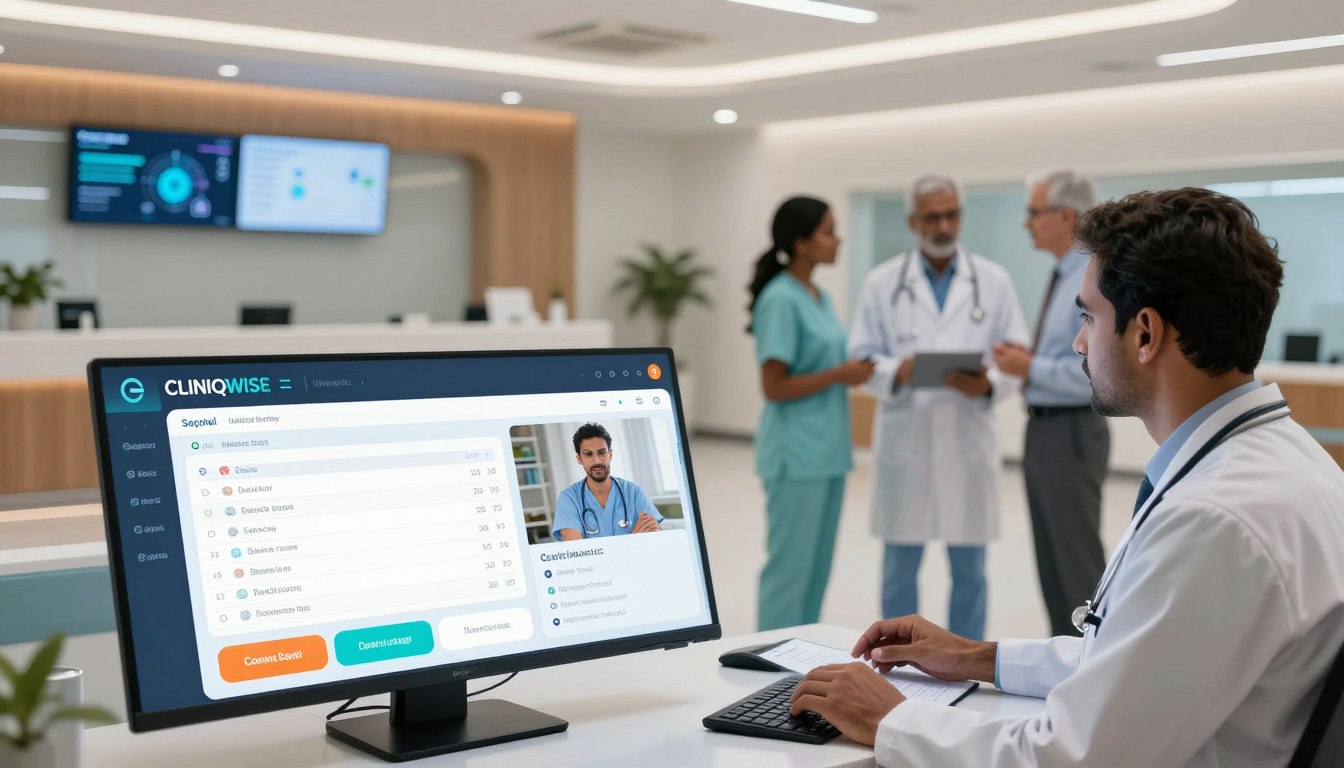
Before purchase, run a pilot programme in a live setting. Record each success and failure to hold the vendor accountable. This helps ensure a functional hospital management system India meets your specific standards.
Cloud Deployment, Security and Integration Checks
Choosing the right technical infrastructure is vital for any modern Indian healthcare facility. Deployment choices affect how well a hospital manages daily work and patient data.
Choosing between cloud-based, hosted and on-premises HMIS deployment
Most facilities choose cloud hospital management software because it removes the need for expensive local servers. Staff can access records anywhere with an internet connection. On-premises systems keep data inside the hospital, giving some institutions full hardware control.
Hosted solutions provide a middle ground, with a third party managing the hospital’s server environment. Each model has different maintenance costs, hardware needs and demands on the internal IT team.
Security controls for patient, financial and operational information
Protecting sensitive health data is essential in the digital age. Strong systems use strict controls to prevent unauthorised access and data breaches.
User permissions, audit trails, authentication and session controls
Administrators should ensure the software supports role-based access control. A receptionist sees only needed information, while a doctor has full access to clinical notes. Audit trails record every patient record change and support staff accountability.
Encryption, backups, disaster recovery and business continuity
Data must be encrypted during transit and at rest to maintain strong security. Reliable cloud-based hospital management software performs daily backups automatically in secure, off-site locations. The hospital can then restore operations quickly after hardware failure without losing critical information.
Privacy, retention and access policies for Indian healthcare organisations
Indian hospitals must follow local privacy rules about how long patient records remain available. Clear retention policies should explain when records are archived. Archived records must remain accessible for legal or clinical audits, while access policies need regular review as staff roles change.
Integrations with payment systems, laboratory devices, pharmacy tools and accounting software
An effective system cannot work alone. It should connect with external tools to reduce manual entry and human error. Modern platforms often include connectors for payment gateways, diagnostic laboratory equipment and pharmacy inventory systems.
API availability, export options and avoiding unnecessary vendor lock-in
When assessing custom hospital software development, hospitals should demand open APIs for future flexibility. Without simple exports in standard formats, a hospital could become trapped in a long contract. Confirm that the software supports data portability, allowing the hospital to change providers when necessary.
What to confirm about hosting location, uptime targets and incident response
Before buying, stakeholders should ask clear questions about the technical service level agreement. They should confirm that servers are located within India to meet data residency requirements. The vendor should also offer an uptime guarantee and a clear response plan for technical emergencies.
Feature | Cloud-Based | On-Premises |
Initial Cost | Low (Subscription) | High (Hardware) |
Maintenance | Vendor Managed | Internal IT Team |
Scalability | High | Limited |
Whether choosing cloud-based hospital management software or custom hospital software development, hospitals must focus on security and interoperability. These checks help hospitals build a strong digital foundation for the future.
Practical Indian Hospital Use Cases for an Integrated HMIS
From busy urban centres to rural districts, digital transformation in Indian healthcare takes many forms. Each facility needs a tailored software integration plan for efficiency and patient safety.
Urban multi-speciality hospital in Mumbai, Delhi or Bengaluru
Managing high OPD volumes, appointments, billing and WhatsApp reminders
Large urban hospitals manage thousands of patient interactions each day. An integrated system lets these facilities automate appointment scheduling and cut waiting times.
Real-time tracking of patient queues.
Automated WhatsApp notifications for appointment confirmations.
Unified billing modules that link pharmacy and laboratory charges instantly.
"Digital integration in high-volume hospitals is no longer a luxury; it is the backbone of modern patient care and operational sustainability."
Tier-two city nursing home in Pune, Jaipur or Lucknow
Connecting admissions, pharmacy, laboratory, discharge and inventory control
Nursing homes in tier-two cities often have few administrative staff. Centralising operations keeps pharmacy stock levels accurate and links them to patient consumption.
This connectivity prevents revenue leakage and creates discharge summaries without delay. Staff can focus on clinical care instead of manual data entry.
Small clinic group in Hyderabad, Chennai or Kochi
Standardising patient records, prescriptions and follow-up across branches
Clinic groups need a consistent patient experience across branches. A cloud-based system makes a patient's medical history is accessible to doctors at any group location.
Standardised digital prescriptions improve legibility and reduce medication errors. Automated follow-up reminders support long-term patient engagement and loyalty.
District or regional hospital serving semi-urban and rural communities
Supporting different staff roles, intermittent connectivity planning and simple reporting
Regional hospitals often face unstable internet connections and varied staff skill levels. The software must be resilient and user-friendly during network outages.
Feature | Benefit | Priority |
Offline Mode | Data safety during outages | High |
Role-based Access | Security for staff | Medium |
Simple Reporting | Easy administrative oversight | High |
Growing 10–100+ bed hospital
Scaling from core OPD and billing functions to IPD, EMR, laboratory and analytics
As a hospital grows, its software must handle more complex inpatient needs. Moving from basic billing to a full Electronic Medical Record (EMR) system marks a critical milestone.
Advanced analytics dashboards give owners insights into bed occupancy and revenue trends. This data-driven approach supports informed decisions as the hospital expands its services.
How to Compare HMIS Providers and Build a Practical Evaluation Scorecard
A clear scorecard helps hospital administrators compare digital health solutions with confidence. Instead of seeking the best hospital management software India, stakeholders should assess weighted evidence against their operational needs. This method supports long-term growth and clinical excellence.
Functional coverage across clinical, financial and support departments
A strong system connects patient care with efficient administration. It should support OPD and IPD workflows, pharmacy stock control, and laboratory reporting. Comprehensive coverage lets data move between departments without manual work.
ABDM and ABHA integration evidence
Checking abdm-compliant hospital software requires more than marketing claims. Hospitals should request records proving active API integration with the sandbox environment. They must confirm that the system creates, finds, and links patient ABHA IDs in real time.
Ease of use, configuration and staff adoption
Even advanced software fails when clinical staff cannot navigate it easily. A simple interface cuts training time and reduces data-entry errors during busy shifts. Staff adoption rises when screens follow clinical workflows instead of forcing rigid processes.
Implementation, training, support and response processes
Moving to a new digital platform is a critical stage that needs dedicated support. A reliable top hospital software provider will provide a clear implementation roadmap, data migration help, and staff training. Fast technical responses help maintain continuous hospital operations.
Pricing structure, user limits, modules, storage and integration costs
Clear pricing prevents unexpected costs later in the partnership. Hospitals should assess total ownership costs, including extra users, storage, and third-party integrations. Modular pricing lets facilities pay only for features they currently need.
Scalability, performance and access for multiple facilities
As a healthcare organisation grows, its software must handle rising patient numbers. It should support access across multiple facilities, so administrators can monitor branches from one dashboard. Reliable performance under heavy use is essential for any modern hospital.
Suggested scorecard categories for a fair comparison
A weighted scorecard provides a balanced way to assess vendors. The table below offers a framework for comparing key indicators across potential partners.
Evaluation Category | Weighting | Key Metric |
Clinical Functionality | 30% | EMR/EHR workflow efficiency |
ABDM Compliance | 25% | API integration success rate |
Support & Training | 20% | Response time and documentation |
Total Cost of Ownership | 15% | Hidden fees and scalability |
Usability & Adoption | 10% | Staff training duration |
Red flags including vague compliance language, unclear ownership and weak data-export terms
Be cautious when vendors use unclear language about data ownership or compliance. A reputable partner will provide clear terms for moving patient records. Difficulty exporting data or confirming compliance is a serious warning sign for long-term use.
Quick Answers About ABDM-Ready HMIS Software in India
Digital health in India can be complex, so administrators need clear answers about software compliance. Many struggle to separate marketing claims from real technical capabilities when choosing a new system.
What is ABDM-ready hospital management software?
Explain that readiness should refer to demonstrable ability to connect relevant workflows with ABDM services and standards, not merely a promotional label.
True ABDM-ready software connects with the Ayushman Bharat Digital Mission ecosystem through working features. It is not a badge or marketing tag, but a demonstrable ability to exchange data securely through official APIs.
A compliant system must move health information smoothly while following national data standards. Hospitals should check that it communicates with the sandbox environment and handles real-world transactions.
Does ABDM-ready software automatically create an ABHA account?
Clarify the difference between supporting ABHA-related workflows and creating or linking an account with patient participation and consent.
Software cannot create an ABHA account automatically without the patient’s explicit involvement. It provides the necessary tools to create or link an account, but active patient consent remains essential.
This keeps patients in control of their health data at all times. The software bridges verification through OTPs or biometric authentication, as required by national guidelines.
What modules should an Indian hospital management system include?
Give a concise answer covering OPD, IPD, EMR or EHR, billing, pharmacy, laboratory, inventory, appointments, reporting and communication.
A robust Hospital Management Information System (HMIS) should meet a modern facility’s varied needs. It should combine clinical, financial and administrative functions on one unified platform.
Module Category | Primary Function | Operational Benefit |
Clinical | EMR/EHR & Lab | Improved patient outcomes |
Financial | Billing & Pharmacy | Revenue cycle management |
Administrative | Inventory & Reporting | Optimised resource usage |
Patient Engagement | Appointments & Alerts | Enhanced patient experience |
Is cloud hospital management software suitable for a small clinic?
Explain how cloud deployment can support access and maintenance while requiring checks on security, connectivity, backups and support.
Cloud-based solutions suit small clinics because they remove the need for expensive on-site servers. They offer flexibility and accessibility, letting doctors view records anywhere with an internet connection.
However, clinics must prioritise data security and perform regular backups. Choose a provider that guarantees high uptime, strong encryption and reliable technical support for uninterrupted operations.
Why should hospitals consider CliniqWise?
Summarise its unified workflows for clinics, nursing homes and 10–100+ bed hospitals, including WhatsApp automation and the core HMIS modules.
CliniqWise offers a unified platform for small clinics, nursing homes and 100-bed hospitals. It scales effectively while bringing OPD and IPD workflows together.
This reduces administration and improves data accuracy across departments. Its WhatsApp automation sends appointment reminders and patient updates, improving communication.
Its comprehensive core modules help providers focus on quality care instead of managing fragmented software systems.
Conclusion
Modernising a healthcare facility requires more than adopting new technology. Indian hospitals must value evidence over marketing claims when assessing digital systems. Checking ABDM and ABHA workflows remains the key step for administrators seeking long-term compliance.
A strong hospital management system should link clinical excellence with efficient operations. It must handle data securely, connect smoothly with existing diagnostic tools, and provide scalable reporting. These features protect patient information while supporting the organisation's growth.
CliniqWise offers a unified platform for clinics and hospitals managing up to 100 beds. It connects pharmacy, laboratory, and billing modules through one clear interface, simplifying complex tasks. This reduces administrative work and improves patient care.
Decision-makers should request a documented demonstration and structured pilot phase before buying. Testing software in a real-world setting helps staff judge usability and support responsiveness. These steps help ensure the solution meets the facility's and patients' unique needs.
If you are comparing ABDM-compliant HMIS platforms available in India, see our detailed guide to [Top 10 ABDM Compliant HMIS Software in India 2026] for a broader market comparison.
Looking for an Enterprise Solution?
Discover how Cliniqwise helps clinics & hospitals automate workflows, reduce errors, and streamline patient care.
Frequently Asked Questions
What is ABDM-ready hospital management software India?
ABDM-ready hospital management software India can connect hospital information systems with the Ayushman Bharat Digital Mission framework. This means hospital software India can support ABHA integration, manage digital health records, and follow national data standards. It is a functional requirement, not just a promotional label, for ABDM-compliant HMIS and smooth health information exchange across India.
Does ABDM-ready software automatically create an ABHA account?
No, an ABDM hospital management system does not create accounts automatically. ABDM-enabled healthcare software supports ABHA discovery, creation, and linking, but patients must participate and give informed consent. A reliable hospital management system India keeps data sharing and account linking within patient privacy laws and ethical standards.
What clinical and operational modules should an Indian hospital management system include?
Comprehensive hospital management software India should include OPD management software, IPD management software, EMR software India, and hospital billing software. It should also integrate pharmacy management, laboratory information systems, and inventory control. Healthcare IT solutions provider offerings like CliniqWise may also include reporting dashboards and WhatsApp automation for hospitals, improving communication and efficiency.
Is cloud-based hospital management software suitable for small clinics and nursing homes?
Yes, cloud-based hospital management software suits smaller facilities because it avoids major spending on local servers and IT maintenance. Cloud hospital management software provides secure access to patient records from anywhere, while the healthcare IT solutions provider manages backups and security updates. However, check the provider's uptime targets and data encryption standards to protect sensitive medical information.
Why should a healthcare facility choose CliniqWise as their ABDM-compliant hospital software?
CliniqWise, supported by Tridev Technologies, provides unified HMIS software India for clinics, nursing homes, and 10–100+ bed hospitals. It offers integrated ABDM solutions for hospitals, combining EMR software India, hospital billing software, and WhatsApp automation for hospitals. This creates one accurate patient record, from registration and consultation through pharmacy dispensing and discharge.
What is the difference between EMR software India and EHR software India within an ABDM framework?
EMR software India usually means a patient's digital chart within one facility, such as a clinic or hospital. EHR software India is designed for sharing between different healthcare providers. In an ABDM hospital management system, EMR data joins the wider EHR ecosystem through ABHA integration, letting authorised professionals view a patient's health history across the national network.
How does a hospital ERP India handle data security and patient privacy?
A modern hospital ERP India uses several security layers, including role-based access controls, data encryption, and detailed audit trails. Whether cloud-based hospital management software or on-premises software is used, only authorised staff should view specific medical or financial records. This matters especially for ABDM-compliant hospital software, which must manage digital consent and protect data during health information exchanges.
Can custom hospital software development compete with a top hospital software provider?
Custom hospital software development offers tailored features, but usually costs more and takes longer than software from a top hospital software provider. Established solutions like CliniqWise provide pre-tested, ABDM-enabled healthcare software that meets national standards. For most 10–100+ bed hospitals, a configurable hospital management system India offers a more reliable, scalable path to digital transformation.
How does WhatsApp automation for hospitals improve the patient experience?
When added to a hospital information management system, WhatsApp automation for hospitals can send appointment reminders, laboratory reports, and follow-up instructions automatically. Linking it with OPD management software can reduce missed appointments and improve treatment adherence. It also keeps the required records within the hmis software india.