ABDM-Compliant Hospital Software: Complete Guide for Hospitals in India
India's healthcare sector is rapidly embracing digital transformation, making ABDM-compliant hospital software essential for hospitals and clinics. With ABHA integration, healthcare providers can securely access and exchange patient records, improve care coordination, streamline workflows, and support better clinical decision-making nationwide.
Quick Answer
ABDM-compliant hospital software is a hospital management system designed to meet the requirements of the Ayushman Bharat Digital Mission (ABDM). It supports ABHA integration, HIP and HIU connectivity, FHIR-based health record exchange, and secure interoperability between healthcare providers. By implementing ABDM-compliant software, hospitals can digitize patient records, improve operational efficiency, strengthen care coordination, and align with India's digital health standards.
Choosing the right hospital management software india makes daily tasks easier. Digitalisation helps us keep things standard and safe. These tools will be crucial for our healthcare's success in the future.
Key Takeaways
Digital transformation is essential for modernising healthcare delivery across India.
Utilising national health frameworks improves the accuracy of patient records.
Secure data exchange fosters better collaboration between various medical organisations.
Streamlined workflows reduce administrative burdens for clinical staff.
Future-ready systems ensure long-term compliance with national health standards.
Understanding the Ayushman Bharat Digital Mission (ABDM)
Getting to know the Ayushman Bharat Digital Mission is key for any ho spital in India. It's seen as the foundational architecture for our health system. It aims to link patients, healthcare providers, and insurers smoothly.
The government wants to connect different medical places. Getting abdm compliance is now crucial. It helps hospitals join the national network. This way, we can offer better care to patients.
Abdm certification lets healthcare providers share digital health records safely. This keeps patient info safe for those who need it. We think it's vital for better care and fewer mistakes.
The mission aims for secure data sharing. Getting abdm certification shows we care about data safety and working together. This move makes managing digital health records easier and clearer.
This mission changes how we work with patients. It moves from old paper systems to a digital one. This makes sure every patient's journey is well-documented and safe.
The Critical Need for ABDM-Compliant Hospital Software
Hospitals using paper records face big problems. They struggle to keep things running smoothly and keep data safe. Systems not talking to each other means departments can't share patient info in time.
This mess leads to mistakes, slow treatment, and unhappy patients. A modern hospital information management system is key. It makes sure data moves safely across the whole place. This way, hospitals can avoid the dangers of keeping records by hand.
Efficiency is the heart of good care. Going digital is the only way to keep up.
Getting a abdm integration right makes things easier for hospitals. It cuts down the hassle of following rules by hand. When systems talk well, doctors can focus more on patients and less on paperwork.
This change is crucial for hospitals to keep up with India's healthcare needs.
"Digital health is not just about technology; it is about creating a seamless, patient-centric ecosystem where information is accessible, secure, and actionable."
Also, good abdm hospital onboarding helps avoid problems with old, non-compliant software. By choosing a strong hospital information management system, providers stay ahead. A smart abdm integration plan brings big wins for staff and patients.
By focusing on abdm hospital onboarding, healthcare providers can leave behind isolated data. We think this move is the best way to create a connected, open, and efficient healthcare world for everyone.
Still Managing Hospitals With Paperwork & Registers?
Explore the hospital workflow platform built for ABDM, billing & digital healthcare.
Core Components of the ABDM Ecosystem
The Ayushman Bharat Digital Mission has key roles for health info sharing. It aims to make a secure, unified network for all in India. Knowing these parts helps hospitals meet national standards.
Defining the Roles of HIP and HIU
The system has two main parts: Health Information Provider (HIP) and Health Information User (HIU). A hospital is an HIP when sharing records and an HIU when getting records from others.
HIP HIU integration is crucial for this exchange. It lets hospitals share and get patient data safely, with patient consent. This ensures doctors have all the info they need, no matter where the patient was treated.
HIP:
Manages health records storage and sharing.
HIU:
Gets and uses health data for care.
Consent Manager:
Makes sure data sharing is patient-approved.
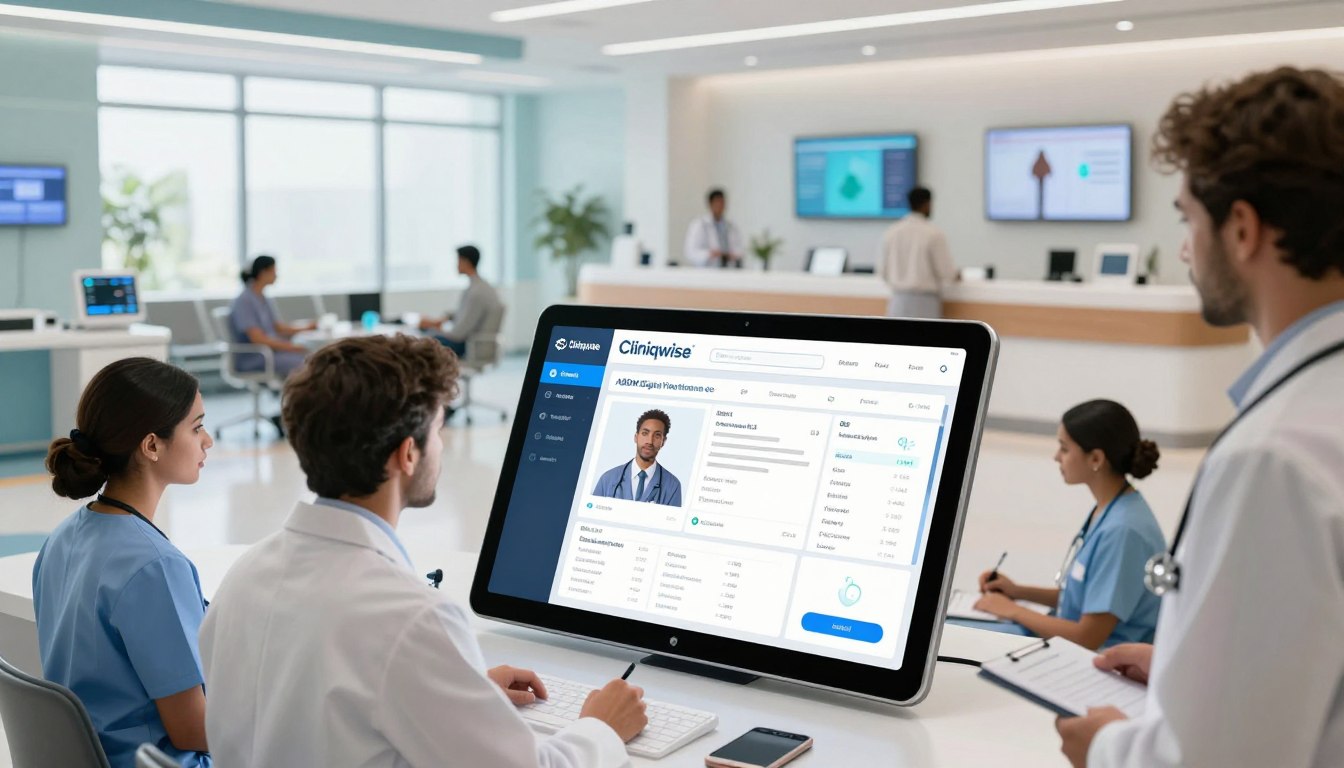
Modern healthcare team using ABHA integrated hospital software for digital patient management and healthcare workflow automation.
The Importance of FHIR Interoperability Standards
Global standards are key for smooth system communication. Using fhir compliant hospital software is now essential. These standards help different systems talk the same language, crucial for true hospital interoperability.
Without these standards, data stays in silos. This makes it hard for doctors to see a patient's full health picture. By focusing on healthcare interoperability, we improve patient care. These standards keep your facility connected in the national network.
Switching to these protocols is a big step for Indian healthcare. It lets providers give better care while keeping data safe and private.
Digitising Hospital Workflows with Modern Technology
Switching from paper to digital records is key for modern healthcare in India. Hospitals need to use technology to work better and help patients more. This change makes data accurate, safe, and easy to get.
Streamlining Patient Registration and ABHA Verification
The first thing patients do is register. With abha registration software, hospitals can check identities fast. This cuts down waiting times and mistakes.
When a patient comes in, their health ID is found quickly. This seamless integration makes the start of their visit better. It lets staff focus on care, not paperwork.
Build an ABDM-Ready Healthcare Facility
Enable interoperable healthcare operations with ABDM compliant HMIS, EMR, and digital patient workflows.
Integrating Consultations, Diagnostics, and Pharmacy
A connected hospital needs hmis software to link departments. With his software, doctors can see patient history right away. This makes sure reports and orders are in sync.
Doctors see lab results quickly, helping them make fast decisions. Pharmacists get digital prescriptions, cutting down on mistakes. This integration is crucial for top care in busy places.
Automating Billing and Medical Record Management
Manual billing can be slow and error-prone. emr software for hospitals automates billing and claims. It saves time and keeps financial records current.
Every note and plan is stored digitally in an abha linked emr. This digital method has many benefits over old ways:
Enhanced Accuracy:
Fewer mistakes in medical records.
Improved Security:
Keeps patient data safe with encryption.
Better Accessibility:
Staff can get records fast.
Workflow Stage | Manual Process | Digital Solution |
Registration | Paper forms | Instant ABHA verification |
Consultation | Physical files | Integrated EMR access |
Billing | Manual entry | Automated invoicing |
Records | Physical storage | Cloud-based archiving |
CliniqWise: A Modern Platform for Connected Healthcare
Modernising hospital operations needs a strong platform. It must link old systems with new digital standards. Many places struggle to stay efficient while following new rules. CliniqWise is a complete solution that brings together different processes into one system.
Overview of CliniqWise Features
CliniqWise is top-notch abdm compliant hospital software for India's healthcare. It makes managing patient data easy and safe. As a top hospital management software india, it simplifies daily tasks.
The platform is also a fhir compliant hospital software. It makes sharing data between healthcare providers easy. As a reliable ehr software india, it helps doctors make better decisions with accurate patient data. This integration is key for better hospital operations and growth.
Pros and Cons of Adopting CliniqWise
Thinking about digital change? It's important to look at the good and the bad. The table below shows key points for hospital leaders to consider.
Feature Category | Key Advantages | Implementation Considerations |
Regulatory Compliance | Full ABDM and FHIR alignment | Requires staff training on new protocols |
Data Management | Centralised EHR storage | Migration of legacy patient records |
Operational Efficiency | Automated billing and scheduling | Initial setup time for custom workflows |
Connectivity | Seamless inter-facility data exchange | Network infrastructure requirements |
Recommendations for Implementation
Start by checking your current digital setup. Find out where you're stuck in patient care or record keeping. This helps tailor the abdm compliant hospital software for your needs. A step-by-step approach works best, so staff can adjust without affecting patient care.
Also, invest in training for your team. When they know how to use the hospital management software india, they can improve patient care. Focus on making things work together well and getting your team on board. This way, your hospital can lead in the digital health world.
ABHA Creation and Verification Workflows
We know how important creating and verifying ABHA IDs is for a connected health system. The Ayushman Bharat Health Account is the main digital ID for patients. It keeps their health records safe and easy to access for all providers. By using a abha workflow, hospitals can make sure patient data is right and cut down on paperwork.
Hospitals in India are now using abha registration software to manage patient IDs better. This tech lets staff check patient details quickly with Aadhaar or mobile OTPs. It gets rid of the need for extra paperwork and manual entry.
Good abha integration means being fast but also keeping things secure. Hospitals should train staff well to handle these digital tasks. They must always get patient consent first. Being quick and efficient is key for a modern, patient-focused healthcare place.
"The digitisation of health records is not just a technical update; it's a big change towards a more open and patient-focused healthcare system in India."
To see how digital tools change things, we've looked at old ways versus new ones. Here's a table showing how automated systems are better than manual ones.
Feature | Manual Verification | Automated ABHA System |
Data Accuracy | Prone to human error | High (Verified via API) |
Processing Time | 5–10 minutes | Under 60 seconds |
Record Linking | Disconnected | Seamlessly integrated |
Compliance | Difficult to track | Built-in audit trails |
By focusing on a smooth abha workflow, your place can make sure every patient has a complete health record. Using good abha registration software is the best way to do this. In the end, successful abha integration helps both patients and doctors make better choices with up-to-date health info.
Modernize Your PMJAY Hospital Workflows
Streamline PMJAY claims, ABHA registration, billing, and digital healthcare workflows with Cliniqwise.
Consent-Based Health Information Exchange
We believe that patient empowerment is key in modern digital health records. By giving control to the individual, we make sure medical data is shared safely and with permission. This health information exchange builds trust in India's healthcare system.
The heart of this system is hip hiu integration. A Health Information Provider (HIP) holds the clinical data. A Health Information User (HIU) then requests access for treatment. This keeps data safe and follows national privacy rules.
When a patient sees a new doctor, they don't need to carry files. They give digital consent through their ABHA account. This lets the doctor see their full medical history quickly. This seamless connectivity cuts down on mistakes and boosts efficiency.
"True digital transformation in healthcare is not just about technology; it is about placing the patient at the centre of their own medical journey through secure, transparent data sharing."
To see the change, we've listed the main differences between old systems and new ones below.
Feature | Legacy Systems | Consent-Based Systems |
Data Access | Restricted to local facility | Interoperable across providers |
Patient Control | Limited or non-existent | Full granular consent |
Record Accuracy | Prone to manual errors | Verified digital records |
Security | Physical storage risks | Encrypted digital exchange |
For a strong health information exchange, hospitals must follow standard protocols. By focusing on hip hiu integration, they make sure digital health records are always up-to-date and safe. This focus on technology leads to better health for all in India.
Overcoming Challenges in Legacy Hospital Systems
Switching to digital systems is tough for healthcare in India. Old systems make it hard to work efficiently. Modernising these workflows is now a must for survival.
Admins worry about keeping care going while changing. A strong hospital information management system helps. It's a big step towards abdm compliance.
Using emr software for hospitals makes patient data easy to share. Digital systems cut down on mistakes and make data easier to find. Here are tips for getting to abdm certification:
Audit existing data:
See which records need to be digitised and which can be kept old.
Phased implementation:
Start with one department before going hospital-wide.
Staff training:
Make sure your team knows how to use the new tools.
Interoperability focus:
Pick systems that work well with others.
Changing over needs time and a clear plan. A good hospital information management system makes daily tasks easier. It also helps meet national standards. With the right emr software for hospitals, your path to abdm compliance will be smoother.
The main aim is to improve patient care with technology. Getting abdm certification shows quality and trust. Hospitals should focus on these upgrades to stay ahead in a changing world.
Reduce Claim Delays and Billing Errors
Automate insurance workflows, PMJAY claim processing, and hospital billing operations with intelligent healthcare software.
Benefits for Multi-Speciality Healthcare Organisations
We know managing many branches and specialities needs a single health tech approach. Big medical places often face data spread out, making care hard. With strong hmis software, they can unite all patient and admin data in one place.
Using full his software helps managers see all departments clearly. When everyone uses the same system, talking becomes easier. This hospital interoperability means data moves smoothly between areas without needing people to move it.
For doctors, moving to an abha linked emr changes how they plan treatments. They can quickly see a patient’s full health history, no matter where they were seen before. This quick access to the right info cuts down on mistakes and boosts care results.
Also, using top ehr software india makes hospitals use resources better. It automates tasks, so staff can spend more time with patients. Below, we show how old systems differ from new ones.
Feature | Legacy Systems | Integrated Platforms |
Data Accessibility | Siloed by Department | Unified Across Branches |
Patient Records | Paper-based or Disconnected | ABHA Linked EMR |
Interoperability | Limited or Non-existent | High Hospital Interoperability |
Operational Efficiency | Manual and Slow | Automated and Scalable |
Going digital makes big health groups better at care. Investing in hmis software and his software is more than just tech. It's a smart choice for a future that puts patients first. With ehr software india, hospitals can make sure every patient gets the right care on time.
Practical Use Cases for ABDM Integration
ABDM integration shows how digital health can change the game. It moves from theory to real-life use in India's clinics. With abdm hospital onboarding, places can switch from old paper systems to a new digital one.
One big use is in abha workflow for patient sign-in. Staff can quickly check a patient's ABHA number. This brings in the patient's details right away, cutting down on mistakes.
After sign-in, the system helps make Electronic Medical Records (EMR). These records follow national standards, making them safe for health information exchange. Doctors can then see a patient's full health history with their okay, helping with better diagnosis.
Healthcare interoperability also helps with insurance and referrals. Hospitals can share important health info with insurance or other doctors quickly. This makes things easier for staff and gets patients the care they need faster.
The table below shows how these digital changes help:
Process Area | Traditional Workflow | ABDM-Integrated Workflow |
Patient Registration | Manual data entry | Automated ABHA verification |
Record Sharing | Physical files or PDFs | Secure digital exchange |
Insurance Claims | Paper-heavy verification | Real-time data validation |
Referral Management | Manual referral letters | Instant digital transfer |
These examples show why healthcare interoperability is key for today's hospitals. As we keep improving our abha workflow, we focus on better care and efficiency. With ongoing health information exchange, hospitals can give patients the best care on time.
Conclusion
Using ABDM-compliant software is key for any hospital wanting to succeed in India's digital world. It changes how they handle patient data and work processes.
Hospitals improve patient care by focusing on sharing data the right way. Modern electronic medical records are the base for this change. We urge hospital owners to see this as a chance to make their healthcare better and more connected.
Tools like CliniqWise help hospitals meet these rules easily. By adopting these digital standards, your hospital stays ahead in the health sector. Start your digital journey now to improve care for all your patients.
Frequently Asked Questions
What exactly defines an ABDM compliant hospital software?
An ABDM compliant hospital software, like CliniqWise, meets ABDM standards. It fits well with India's digital health system. This means we can safely share health records.Using this tech, we meet ABDM's high standards. This helps our hospital work better with others across the country.
How does ABHA integration improve our patient registration pro cess?
ABHA integration makes patient checks fast with a 14-digit health number. This cuts down waiting times. It also makes sure patients are linked to the right EMR.This digital method replaces old paper systems. It makes managing hospital info easier.
What role does HIP HIU integration play in the health information exchange?
HIP HIU integration lets us share medical reports and get data from others. This is done through a secure, consent-based system. It helps doctors see a patient's full medical history.This leads to better medical decisions. It's all thanks to our HMIS software.
Why is it essential to use FHIR compliant hospital software?
FHIR is the global standard for healthcare data exchange. For ABDM integration, data must be structured correctly. Our EHR software in India uses FHIR standards.This ensures patient data is accurate and accessible. It's key for healthcare interoperability.
Can CliniqWise help us transition from a legacy hospital information management system?
Yes, CliniqWise helps facilities move from old systems to modern ones. It's designed for ABDM onboarding. It digitises workflows from consultations to billing.Upgrading to this software helps us stay competitive. It eliminates data silos and modernises our systems.
Is the EMR software for hospitals secure when sharing data nationally?
Security is our top priority. Data sharing in the ABDM network is strict and consent-based. No data is shared without patient approval.Our EHR software in India uses advanced encryption. It follows national data protection laws. This ensures patient records are private and secure.
How does an ABHA linked EMR benefit multi-speciality organisations?
An ABHA linked EMR is a single source of truth for patient data. It helps all departments access consistent, up-to-date information. This reduces testing and errors.It makes our hospital info management system more efficient. It improves patient care across departments.