Best ABDM Enabled EMR Software in India 2026 – Features, Integration & Pricing
Review ABDM enabled EMR software in India for 2026. Compare features, ABHA workflows, interoperability, security, pricing, and implementation for buying.
Quick Answer
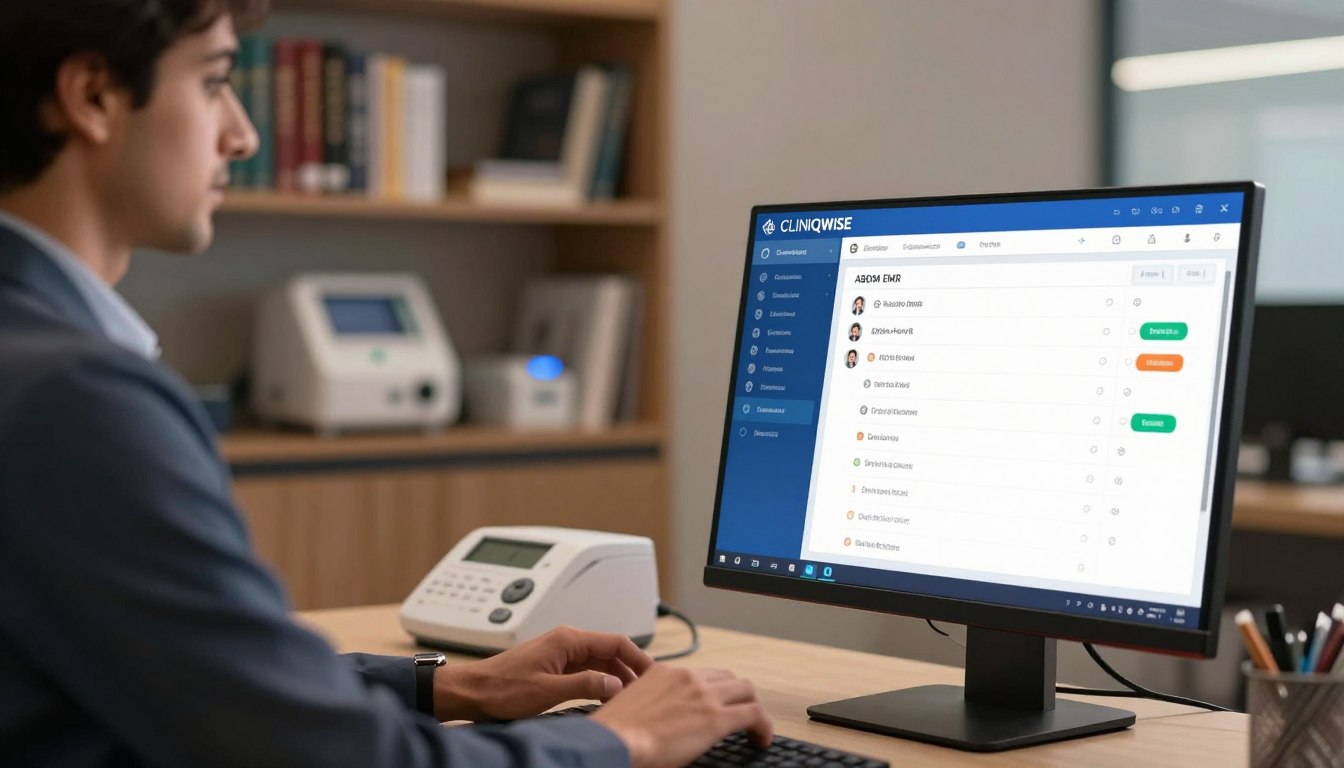
ABDM enabled EMR software is digital healthcare management software integrated with the Ayushman Bharat Digital Mission (ABDM) to facilitate ABHA creation, consent-driven record sharing, and standardized FHIR clinical documentation. In 2026, leading platforms include CliniqWise (a comprehensive cloud-based hospital and clinic management platform covering EMR, OPD, IPD, and billing), Eka Care (optimized for outpatient prescription workflows), and KareXpert (engineered for enterprise multi-specialty hospital systems).
India’s digital healthcare system is changing quickly as hospitals and clinics adopt shared data standards. Choosing the right ABDM EMR software requires balancing clinical efficiency with compliance with national guidelines. Hospital owners, doctors, and healthcare administrators need systems that exchange patient records smoothly, reduce administrative overhead, and protect sensitive medical data.
This comprehensive guide reviews leading platforms for 2026, with a focus on ABHA-linked workflows, patient consent management, and practical day-to-day usability. A reliable EMR software India solution needs far more than basic digital record-keeping. It must support reliable data exchange, structured clinical workflows, clear pricing models, manageable implementation timelines, and dependable data protection protocols.
Whether you manage an independent outpatient clinic, a community nursing home, or a multi-specialty healthcare facility, an ABDM enabled EMR helps future-proof your practice. Making the right software choice is a critical step toward long-term operational readiness. Our review provides clear, practical guidance to help healthcare decision-makers navigate these requirements with complete confidence.
Our ABDM compliant software handles ABHA registration and record linking for hospitals and clinics.
Key Takeaways
Digital transformation in Indian hospitals now centers on unified national health data standards established under the Ayushman Bharat Digital Mission (ABDM).
Effective systems must prioritize secure, consent-based patient record sharing while keeping daily documentation fast and intuitive for clinicians.
Scalability, reliable cloud access, and clinical interoperability remain the most vital factors for long-term operational success.
Pricing transparency—including implementation, training, data migration, and recurring maintenance—is essential when evaluating new technology investments.
A well-planned rollout strategy prevents disruptions to daily outpatient queues, inpatient admissions, and billing workflows.
ABDM Enabled EMR Software: What Buyers Are Actually Evaluating
Choosing modern medical software means looking beyond basic feature lists. Today, healthcare software must align with the national digital health ecosystem. Healthcare leaders need systems that connect seamlessly within the National Health Stack without complicating daily administrative duties. This strategic evaluation drives successful, disruption-free digital adoption in clinics and hospitals across the country.
How ABDM, ABHA, and Digital Health Records Connect
The Ayushman Bharat Digital Mission (ABDM), spearheaded by the National Health Authority (NHA), creates an open digital framework for secure health data sharing. At the heart of this system is the Ayushman Bharat Health Account (ABHA). The ABHA number and address provide every citizen with a verifiable digital health identity. When a patient arrives at a clinic or hospital, staff can use their ABHA address to identify them and link their medical records.
Effective digital health records software India platforms act as the vital operational bridge in this process. The software organizes doctor notes, diagnostic lab results, and discharge summaries into standardized formats that the national network can interpret. This prevents critical patient history from remaining trapped in paper files or isolated databases, making it accessible to authorized healthcare professionals strictly with the patient’s explicit digital consent.
Why ABDM Capability Matters for Indian Hospitals and Clinics
Adopting an ABDM enabled EMR is no longer just an administrative formality—it is a practical operational upgrade. Standardized digital health records help medical facilities improve clinical outcomes through faster registration desk workflows, fewer duplicate diagnostic tests, and better-informed clinical decisions. With modern ABDM healthcare software, healthcare providers can ensure their practices remain compliant, patient-friendly, and ready for an interconnected future.
"The true value of digital health lies in the ability to exchange information securely, ensuring that the patient remains the owner of their own health journey."
Key benefits for healthcare providers include:
Improved Interoperability: Smooth, standardized data exchange with diagnostic laboratories, pharmacies, insurance desks, and referring healthcare facilities.
Enhanced Patient Trust: Transparent, consent-driven workflows that give patients real-time control over their medical history sharing.
Operational Efficiency: Significant reductions in manual paper handling, shorter registration counter wait times, and the elimination of duplicate patient files.
What This Product Review Covers in 2026
This guide provides an objective evaluation of leading electronic medical records software India solutions available today. We assess each platform across real clinical workflows and national data standards. Our review focuses on five critical pillars for healthcare decision-makers:
Product Capabilities: Practical depth of outpatient (OPD), inpatient (IPD), billing, pharmacy, and diagnostic features.
ABDM Alignment: Real-world functionality of ABHA creation, verification, record linking, and digital consent workflows.
Security and Privacy: Role-based permissions, data encryption, and verifiable audit trails for clinical documentation.
Pricing Models: Transparent breakdowns of user subscriptions, bed-based plans, and one-time setup expenses.
Implementation Support: Practical onboarding, data migration from legacy files, and staff training support.
For Abha Abdm compliance guide click here
ABDM-Ready, ABDM-Integrated, ABDM-Compliant, and Certified: Important Differences
Navigating healthcare technology in India requires understanding the terminology software vendors use to describe their capabilities. Many hospital administrators find it difficult to separate marketing claims from actual, functional capabilities. Knowing the difference between planned capability and live operational readiness helps protect your facility from unexpected implementation delays.
Meaning of an ABDM-Ready EMR
An ABDM ready EMR software platform typically has an architectural plan or developmental roadmap to connect with ABDM standards, but it may not yet handle live transactions. These systems are prepared to support future connectivity, but their testing may still be incomplete. Buyers should view an ABDM-ready label as an indicator of future capability rather than an immediate solution for active patient record exchange.
Meaning of an ABDM-Integrated EMR
In contrast, an ABDM integrated EMR has completed required development and testing milestones within the national sandbox framework to support live transactions. It allows clinical staff to verify ABHA addresses, link patient hospital identification numbers, and exchange clinical data through authorized health information networks. When vendors claim active integration, they should be able to demonstrate these workflows live during product evaluations.
How to Assess ABDM Compliance Without Relying on Marketing Language
To identify truly ABDM compliant EMR software, look beyond brochures, sales presentations, and generic certificates. Request a live, end-to-end product demonstration using real-world clinical scenarios:
Registering a patient using their mobile-linked ABHA address.
Generating a digital prescription and linking it to the patient's record.
Sending a digital consent request to a patient's personal health records application.
Retrieving past diagnostic records based on approved patient consent.
If a vendor claims to offer ABDM compatible EMR software, ask to see production transaction logs demonstrating stable connectivity during peak working hours.
ABDM Certifications, Registries, Sandboxes, and Implementation Milestones
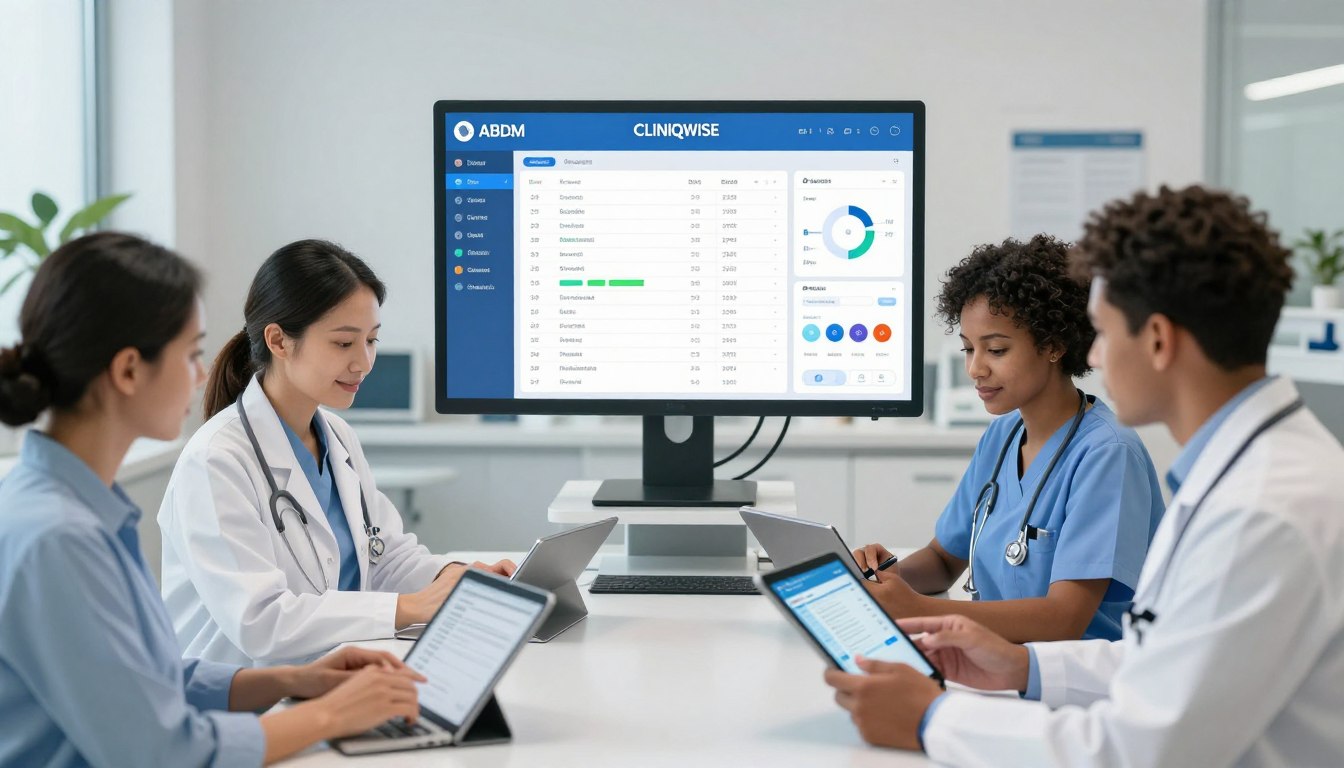
The National Health Authority maintains official digital health registries and sandbox milestones that track software solutions undergoing integration testing. Moving successfully through sandbox stages to production demonstrates that a software vendor has built functional mechanisms for identity verification, record linking, and consent-based health data transfers in accordance with national health standards.
Evidence Buyers Should Request from Each Vendor
Before finalizing any contract, healthcare administrators should ask for verifiable proof of the vendor's technical capabilities:
Official documentation or registry verification confirming completed ABDM sandbox milestones.
Active product demonstrations showing live ABHA generation and consent-based data retrieval.
Customer references from operational clinics or hospitals currently using their ABDM EMR integration in daily practice.
A clear service-level agreement (SLA) covering software uptime, backup routines, and ongoing updates as national guidelines evolve.
Why Certification and Integration Claims Must Be Verified for the Current Release
Healthcare software receives frequent updates, bug fixes, and feature additions. An integration capability that worked in an earlier release can sometimes break or behave inconsistently after an unverified software patch. Always confirm that the vendor's ABDM capabilities are active and thoroughly tested on the exact software version being deployed at your clinic or hospital.
Term | Technical Status | Production Readiness | Practical Meaning for Buyers |
ABDM-Ready | Development Phase | Low | Features are planned or in development; cannot perform live data transfers. |
ABDM-Integrated | Live / Production Testing | High | Completed sandbox testing; actively processes live ABHA and record transactions. |
ABDM-Compliant | Verified Standards | High | Adheres to national data specifications, privacy protocols, and consent rules. |
Certified / Audited | Formally Verified | Maximum | Validated through official sandbox milestones and published in national registries. |
How to Compare ABDM Enabled EMR Software in India
Selecting the right healthcare platform requires evaluating how well the software supports clinical care and administrative efficiency. An effective ABDM EMR software solution must simplify administrative tasks, enhance clinician productivity, and safeguard sensitive medical information.
ABHA Creation, Discovery, Linking, and Patient Consent Workflows
An intuitive ABHA integrated EMR should make patient registration effortless from the moment someone walks into your reception area. The front-desk team should be able to create an ABHA address using mobile OTP or demographic details in less than two minutes. The system must automatically link the ABHA identifier to your facility's internal patient ID, preventing duplicate charts. Furthermore, the patient consent module must clearly display active, expired, and revoked consent requests so clinicians can access medical histories responsibly.
FHIR Resources, Interoperability, and Data Portability
Standardized data sharing relies on international Fast Healthcare Interoperability Resources (FHIR) standards. When evaluating FHIR EMR software India solutions, choose systems that format clinical summaries, diagnostic reports, and digital prescriptions according to standardized FHIR clinical profiles. This ensures that patient data remains readable across diagnostic labs, specialist clinics, and hospitals, protecting your facility against vendor lock-in.
"Interoperability is the backbone of a modern healthcare system, turning isolated data points into a comprehensive narrative of patient health."
— Digital Health Transformation Expert
Clinical Usability for Doctors, Nurses, Front-Desk Teams, and Administrators
A medical system that slows down clinical consultations will quickly face resistance from healthcare professionals. The best ABDM compatible EMR software minimizes screen time and documentation effort. Doctors should be able to generate complete digital prescriptions, order lab tests, and record diagnoses in just a few clicks using customizable specialty templates. Clear, uncluttered interfaces lower fatigue for nursing staff and receptionists, allowing them to focus entirely on patient care.
Deployment Model, Uptime, Backups, Scalability, and Support Coverage
When choosing an EMR software India solution, consider the long-term reliability of its deployment architecture:
Cloud-Based vs. On-Premise: Cloud platforms eliminate local server maintenance costs, offer automatic backups, and provide secure access from any authorized device.
System Uptime & Backups: Look for guaranteed uptime (99.5% or higher) and automated daily off-site data backups.
Scalability: Ensure the software can easily accommodate additional consulting rooms, pharmacy counters, inpatient beds, and satellite branches as your practice expands.
Support Response Times: Verify that the vendor provides dedicated phone and remote desktop support with clear turnaround times for urgent clinical interruptions.
PMJAY, NHCX & NABH Integrated Hospital Management Software
Get 30% Discount if you purchase PMJAY, NHCX & NABH Integrated Hospital Management Software from here
Security, Privacy, Auditability, and Compliance Documentation
Patient medical data requires strict confidentiality and compliance with national privacy guidelines. High-quality ABDM compliant EMR software enforces granular, role-based access controls—ensuring receptionists cannot view confidential clinical notes and pharmacists only access medication details. Every record creation, edit, export, and consent approval must be logged in an unalterable audit trail to guarantee complete legal and operational accountability.
Best ABDM Enabled EMR Software Shortlist for 2026
Choosing an ABDM enabled EMR requires selecting a platform built for true operational reliability. Below is an objective review of prominent healthcare software solutions in India, highlighting their clinical features, organizational fit, and administrative capabilities.
1. CliniqWise
Product Positioning and ABDM Evidence to Verify
CliniqWise is a modern, cloud-based hospital management platform developed by Tridev Technologies, designed specifically for clinics, nursing homes, and hospitals across India. It bridges clinical documentation and day-to-day administrative operations within a clean, single-pane interface. When evaluating CliniqWise, administrators can review its workflow demonstrations for ABHA registration and structured clinical record management tailored to Indian healthcare settings.
Key EMR, Hospital Management, and Operational Features
CliniqWise offers a comprehensive suite of clinical and administrative modules:
Clinical Modules: Electronic Medical Records (EMR/EHR), outpatient department (OPD) queue handling, inpatient department (IPD) ward and bed allocation, doctor consultation dashboards, and specialty-friendly digital prescriptions.
Administrative & Billing: Patient demographic management, integrated counter billing, itemized estimation, insurance desk tracking, and detailed financial reports.
Ancillary Departments: Centralized pharmacy sales and batch tracking, diagnostic laboratory orders and test reports, real-time inventory management, and doctor scheduling.
Hospital Administration: Role-based permissions, multi-counter workflows, daily collection analytics, and operational audit reports.
Pros for Clinics, Nursing Homes, and Growing Hospitals
Unified All-in-One Architecture: Combines outpatient EMR, inpatient operations, pharmacy, lab, and billing without requiring multiple disconnected software tools.
User-Friendly Interface: Clean, modern visual layout that reduces typing time for busy doctors and minimizes onboarding training for front-desk staff.
Cloud Accessibility: Accessible securely through web browsers without requiring expensive local on-premise servers or dedicated on-site IT maintenance teams.
Considerations and Questions for the Vendor
Inquire about the optimal data migration process from existing desktop spreadsheets or legacy billing software.
Confirm the specific onboarding schedule and user training plans for clinical and front-desk staff.
Best-Fit Recommendations and Pricing Information to Confirm
CliniqWise is an ideal fit for independent outpatient polyclinics, nursing homes, and mid-sized hospitals seeking a dependable, modern management system that handles both clinical records and hospital administration. Contact Tridev Technologies directly to confirm subscription tiers based on your facility's operational size, bed capacity, and department requirements.
2. Eka Care
Product Positioning and ABDM Evidence to Verify
Eka Care is an established healthcare platform focused on clinical digitisation and patient communication. It is designed primarily for outpatient doctors and clinics looking to transition from paper prescriptions to digital medical documentation. Buyers should verify its sandbox milestones and review live ABHA creation workflows.
Key EMR, ABHA, Consent, and Interoperability Features
The software provides streamlined tools for quick ABHA generation via mobile OTP, appointment scheduling, digital prescription writing, and consent-based health record retrieval. It allows practitioners to view longitudinal patient records in a unified timeline.
Pros for Doctors, Clinics, and Connected Care Workflows
Rapid prescription pad interface with specialty-specific clinical templates.
Strong patient-facing communication tools and mobile record access.
Minimal hardware requirements, operating smoothly on tablets and standard desktop computers.
Cons, Limitations, and Questions for the Vendor
Highly focused on outpatient workflows; facilities requiring complex multi-ward inpatient management (IPD), surgical scheduling, and advanced bed billing may find it limited.
Inquire about compatibility with in-house hospital laboratory equipment and advanced central inventory systems.
Best-Fit Recommendations and Pricing Information to Confirm
Eka Care is well-suited for solo practitioners, outpatient polyclinics, and consulting physicians prioritizing quick clinical documentation. Confirm annual subscription tiers per consulting doctor and any additional charges for SMS notifications or hardware integrations.
3. KareXpert
Product Positioning and ABDM Evidence to Verify
KareXpert provides an enterprise-oriented ABDM hospital EMR and hospital information management suite engineered for multi-specialty healthcare institutions and hospital networks. Buyers should review case studies of high-volume deployments and verify its production-level data exchange capabilities.
Key Hospital EMR, Patient Record, and ABDM Integration Features
The platform offers deep integration across enterprise hospital departments, linking emergency rooms, operating theaters, intensive care units, inpatient wards, central pharmacy stores, radiology, and diagnostic laboratories using structured FHIR clinical data formats.
Pros for Hospitals, Health Systems, and Multi-Department Operations
Broad functional scope covering complex hospital workflows from registration to final discharge.
Centralized multi-facility management capabilities for expanding hospital chains.
Advanced analytics dashboards for monitoring administrative and clinical performance.
Cons, Implementation Risks, and Possible Complexity
A comprehensive enterprise scope typically requires a longer implementation timeline and structured change management.
The interface features numerous deep settings, requiring structured, multi-session staff training.
Best-Fit Recommendations and Pricing Information to Confirm
KareXpert is best suited for large multi-specialty hospitals, corporate healthcare groups, and tertiary facilities with dedicated internal IT personnel. Request a complete quotation detailing upfront setup, data migration, and annual enterprise maintenance fees.
4. Clinicea
Product Positioning and ABDM Evidence to Verify
Clinicea is a clinical management platform developed specifically for outpatient practices, specialty clinics, and aesthetic or dental centers. Healthcare providers should verify its current ABDM connectivity modules and review production demonstrations of patient identity linking.
Key Clinic EMR, Appointment, Prescription, and Patient Record Features
The platform specializes in appointment booking, outpatient documentation, electronic clinical notes, treatment packages, automated appointment reminders, and outpatient billing.
Pros for Outpatient Clinics and Independent Doctors
Visually appealing appointment calendar and quick patient check-in workflows.
Strong clinical documentation tools for specialty outpatient practices.
Cloud-based deployment that requires minimal local computer setup.
Cons, Scale Considerations, and ABDM Workflow Gaps to Test
Primarily built for clinic environments; does not cater to full-scale inpatient ward management, complex OT workflows, or multi-department hospital administration.
Multi-counter billing and hospital-wide pharmacy inventory require careful functional review during demonstrations.
Best-Fit Recommendations and Pricing Information to Confirm
Clinicea is ideally suited for solo doctors, outpatient specialty clinics, and polyclinics that do not operate overnight inpatient beds. Check pricing tiers for multiple doctors and multi-location clinic setups.
5. National Digital Health Ecosystem & Official Portals
Alongside commercial software platforms, healthcare decision-makers should also evaluate authoritative platforms provided by the National Health Authority (NHA) as part of the public digital infrastructure:
ABDM Sandbox & Production Registry: Official government portals listing software solutions that have completed integration testing milestones across various digital health modules.
ABHA Mobile Applications: Government-supported patient personal health record (PHR) applications that patients use to approve consent requests and view linked health records.
Healthcare Professionals Registry (HPR) & Health Facility Registry (HFR): National master registries where doctors and hospitals register their credentials to establish institutional trust within the digital ecosystem.
Understanding these foundational public platforms helps buyers confirm how commercial software interacts with national verification registries.
Shortlist Comparison Table for ABDM-Enabled EMR Buyers
Software Platform | Primary Operational Focus | Hospital & Clinic Fit | Key Strengths | Deployment Model |
Comprehensive Hospital & Clinic Management | Clinics, Nursing Homes & Mid-Sized Hospitals | Unified EMR/EHR, OPD, IPD, Billing, Pharmacy, Lab, Inventory & Administration | Cloud-Based SaaS | |
Eka Care | Outpatient Clinical Documentation | Solo Doctors & Outpatient Clinics | Fast digital prescription pads, patient communication & clean doctor UI | Cloud-Based |
KareXpert | Enterprise Hospital Information System | Large Hospitals & Multi-Branch Networks | Deep inpatient management, multi-department enterprise workflows & advanced reporting | Cloud / Enterprise |
Clinicea | Specialty Clinic Management | Outpatient Clinics & Specialty Practices | Appointment scheduling, specialty clinical notes & outpatient billing | Cloud-Based |
Key Evaluation Criteria for Shortlisted Software
When comparing platforms from the shortlist, evaluate vendors across these four operational criteria:
ABHA and Consent Workflow Coverage: Confirm that front-desk staff can verify ABHA details quickly without slowing down peak morning queues, and that the patient consent manager is responsive.
FHIR and External-System Interoperability: Ensure the software adheres to standardized FHIR clinical data formatting so lab reports and clinical summaries remain portable.
Facility Scale & Workflow Match: Choose software that matches your physical operational structure. A pure outpatient clinic system will struggle with inpatient admissions, while an enterprise hospital suite may overwhelm a 15-bed nursing home.
Pricing Transparency & Setup Effort: Request an itemized cost estimate covering initial database setup, staff onboarding, legacy record transfer, and recurring support.
Core Clinical and Administrative Features to Expect
Modern ABDM hospital management software must serve as the single source of truth for your entire organization, uniting clinical care with daily administrative operations.
+-------------------------------------------------------------------------+
| UNIFIED HOSPITAL OPERATIONAL FLOW |
+-------------------------------------------------------------------------+
| Front Desk: Quick Registration (ABHA Search & Verification) |
| │ |
| ▼ |
| Consultation: EMR / OPD (Digital Prescriptions & Diagnostic Orders) |
| │ |
| ├─────────────────────────────────┐ |
| ▼ ▼ |
| Diagnostics & Pharmacy: Inpatient Ward (IPD): |
| Lab Tests & Medication Dispensing Bed Allocation & Nursing Notes |
| │ │ |
| └─────────────────────────────────┘ |
| ▼ |
| Billing Desk: Consolidated Invoicing & Discharge Management |
+-------------------------------------------------------------------------+
Patient Registration, Demographic Data, and Duplicate-Record Prevention
Smooth patient onboarding is the cornerstone of hospital efficiency. High-performing ABDM enabled hospital software uses unique internal identifiers alongside national ABHA numbers to maintain accurate patient profiles. Smart search tools match records against mobile numbers and demographic details, preventing accidental duplicate charts that confuse clinical histories.
Digital Patient Records, EMR and EHR Documentation
A comprehensive EMR software for hospitals replaces fragile paper folders with structured, easily searchable digital records. Clinicians can review past consultation notes, known drug allergies, past diagnoses, and immunization histories in seconds. This ensures clinical decisions are guided by accurate historical context while keeping records secure and durable.
OPD, IPD, Emergency, Nursing, and Discharge Workflows
A complete hospital suite coordinates every stage of the patient journey:
Outpatient (OPD): Organizes doctor consultation queues, manages walk-in tokens, and tracks vital signs.
Inpatient (IPD): Tracks bed occupancy, coordinates ward transfers, and records daily nursing notes and medication charts.
Discharge Management: Generates detailed discharge summaries that automatically compile diagnostic findings, treatments administered, and follow-up advice into a clear document for the patient.
Appointments, Queues, Referrals, and Follow-Up Management
Well-organized appointment scheduling minimizes lobby congestion and patient frustration. Modern EMR software for clinics provides real-time token displays, automated visit reminders, and simple doctor schedule management. Referral tracking helps multi-specialty centers route patients smoothly between general physicians and specialized consultants.
Digital Prescriptions, Clinical Notes, Diagnoses, and Care Plans
Clear digital prescriptions eliminate handwriting misinterpretations and ensure patient safety. Physicians can quickly select medications from an integrated drug database, set dosages and durations, attach standard diagnostic codes, and add custom dietary instructions. Tailored specialty templates allow doctors to complete thorough clinical notes in seconds.
Billing, Insurance, Pharmacy, Laboratory, Inventory, and Reports
An integrated hospital management system connects clinical orders directly to back-office billing:
Billing & Insurance: Automatically pulls consultation fees, diagnostic orders, and bed charges into a unified invoice, reducing manual billing entries.
Pharmacy & Inventory: Deducts dispensed medications directly from pharmacy stock in real time, alerts staff to low inventory, and tracks expiry dates by batch.
Laboratory Management: Sends doctor lab orders directly to diagnostic counters and attaches verified test results directly to the patient's electronic file.
Management Reports: Provides administrators with real-time visibility into daily revenue collections, bed occupancy rates, departmental performance, and patient footfall.
Feature Category | Primary Clinical Impact | Core Administrative Benefit |
Patient Registration | Eliminates misplaced charts and mismatched histories | Prevents duplicate records and shortens lobby wait times |
Clinical Documentation | Ensures comprehensive continuity of care | Guarantees clear, legally compliant medical records |
IPD & Nursing Stations | Tracks medication administration and patient vitals accurately | Optimizes bed turnover and streamlines ward management |
Pharmacy & Inventory | Prevents dispensing errors and medication stockouts | Controls procurement costs and monitors batch expiry dates |
Consolidated Billing | Links diagnostic orders and treatments directly to billing | Accelerates checkout and prevents unbilled hospital services |
Administrative Reporting | Helps doctors track longitudinal patient recovery | Gives administrators data-backed insights on revenue and growth |
ABHA Workflows, Consent-Based Exchange, and FHIR Interoperability
Operating an ABDM integrated EMR connects your healthcare facility to a secure national digital network, enabling safe, standardized clinical record transfers across providers.
Registering or Linking a Patient’s ABHA Without Creating Duplicate Identities
Accurate patient identification is essential for maintaining dependable medical histories. Modern digital health records software India solutions verify a patient’s ABHA details directly against national registries during initial registration. Front-desk staff can look up an existing ABHA using an OTP sent to the patient's Aadhaar- or mobile-linked phone number, or scan a patient's ABHA QR code.Once verified, the software securely maps the ABHA address to the patient's internal hospital record. This cross-checks key demographic details—such as name, gender, and year of birth—preventing the creation of fragmented duplicate files in your local database.
Recording Consent Before Sharing or Retrieving Health Information
Patient privacy is the core pillar of the Ayushman Bharat Digital Mission. Under national guidelines, medical records cannot be accessed across facilities without explicit, digitally verifiable patient permission. An ABHA integrated EMR utilizes standardized digital consent requests managed through the patient's chosen personal health records application.Patients maintain complete authority over their medical information. They can specify which records to share (such as diagnostic reports from a specific timeframe) and set a definite validity window for access. The software logs each consent artifact, ensuring that every data request remains fully transparent, legally compliant, and verifiable.+-------------------------------------------------------------------------+
| CONSENT-BASED DATA EXCHANGE PROCESS |
+-------------------------------------------------------------------------+
| 1. Doctor initiates record request via ABDM Enabled EMR |
| │ |
| ▼ |
| 2. Digital Consent Request sent to Patient's Mobile (PHR App) |
| │ |
| ▼ |
| 3. Patient reviews scope & approves request on their phone |
| │ |
| ▼ |
| 4. Secure digital consent artifact delivered to hospital system |
| │ |
| ▼ |
| 5. Past clinical records retrieved & displayed securely in EMR |
+-------------------------------------------------------------------------+
Exchanging Clinical Data Through ABDM-Compatible Health Information Workflows
Once digital consent is approved, the software facilitates encrypted data exchange between healthcare facilities. Acting as an authorized digital health bridge, the system allows clinicians to review external diagnostic results, past treatment plans, or immunization histories. Similarly, when a patient is discharged, the hospital can securely share their digital discharge summary, allowing the patient to access their records on their phone anytime.
FHIR Profiles, Structured Data, and Standardized APIs
Seamless record exchange requires a common digital language. FHIR EMR software India solutions structure clinical information using international HL7 FHIR standards. Clinical notes, prescription items, and laboratory findings are formatted into standardized digital resources. This structure allows distinct hospital systems, standalone laboratories, and diagnostic centers to interpret clinical information accurately without conversion errors.
Handling Consent Withdrawal, Corrections, and Failed Exchanges
A resilient clinical software system must handle operational interruptions smoothly:
Consent Revocation: If a patient cancels their data-sharing permission via their mobile application, the EMR must immediately terminate external data access.
Failed Exchanges & Retries: During occasional internet disruptions or registry delays, the software should queue requests and log clear error alerts for administrative review.
Data Correction: If a demographic mismatch occurs, administrative staff should have guided correction workflows to update records without corrupting existing clinical notes.
Workflow Component | Primary Clinical Function | Key Technical Requirement |
ABHA Identity Linking | Fast patient verification; prevents duplicate charts | Secure integration with National Health Registries |
Consent Management | Protects patient privacy; manages digital permissions | Support for standard digital consent artifacts |
Clinical Data Exchange | Safe sharing of lab reports and clinical summaries | Standardized FHIR resource mapping |
Error Handling & Logs | Maintains operational reliability during network outages | Detailed error logs and automatic retry queues |
Security, Privacy, Audit Trails, and Technical Reliability
For any healthcare institution, protecting patient medical records is both a serious legal responsibility and an ethical duty. When investing in ABDM compliant EMR software, healthcare leaders must ensure the platform provides robust security safeguards against unauthorized access, data loss, and cyber threats.
Role-Based Access for Doctors, Nurses, Receptionists, and Administrators
Modern security starts with granular Role-Based Access Control (RBAC). Staff members should only access the specific information necessary to perform their daily duties:
Front-Desk Receptionists: View scheduling, patient demographic profiles, and billing counters; no access to confidential clinical consultation notes.
Doctors & Clinicians: Full access to clinical documentation, past medical history, lab results, and prescription pads.
Nursing Staff: Access to ward bed lists, vitals monitoring, and inpatient medication charts.
Pharmacists: View prescribed medications, dosages, and inventory dispensing; no access to general clinical histories.
Audit Logs for Record Access, Edits, Exports, and Consent Activity
Accountability requires comprehensive activity logging. An enterprise-grade clinical system automatically records every user action—including who viewed a patient chart, when clinical notes were updated, what billing adjustments were made, and when reports were exported. These unalterable audit trails help hospital administrators maintain complete internal oversight and satisfy regulatory scrutiny.
Encryption, Authentication, Session Controls, and Device Management
Robust data protection requires industry-standard security practices:
Data Encryption: All patient records must be protected using AES-256 encryption at rest and secure SSL/TLS encryption during data transmission.
User Authentication: Enforce secure user logins with multi-factor authentication (MFA) for administrative and remote accounts.
Automatic Session Timeout: Terminate inactive user sessions after a set period of inactivity to prevent unauthorized access at unattended nurse stations or reception desks.
Cloud Hosting, Data Residency, Backups, and Disaster Recovery
Healthcare data must comply with national regulations governing data residency. The software's cloud servers should reside within data centers located physically inside India. Look for automated daily backups and disaster recovery protocols that ensure patient records can be restored quickly in the event of local hardware failure or internet disruptions.
Scalability for Multiple Facilities, Departments, and Patient Volumes
Technical reliability must keep pace with your facility's growth. Whether managing a single consultation room or expanding into a 100-bed hospital with multiple specialized wings, the software must maintain fast search speeds, rapid bill generation, and stable data storage without experiencing slowdowns during peak hours.
Security Safeguard | Standard Operational Requirement | Core Benefit for Hospitals |
Role-Based Access (RBAC) | Granular user permissions by clinical department | Prevents unauthorized viewing of sensitive patient records |
Activity Audit Trails | Automatic tracking of file views, edits, and exports | Delivers complete institutional accountability and legal compliance |
Data Encryption | AES-256 at rest; TLS encryption in transit | Safeguards medical records from external cyber threats |
In-Country Cloud Hosting | Verified server locations within Indian borders | Fulfills national regulatory requirements for medical data storage |
Automated Backups | Encrypted daily off-site cloud backups | Ensures business continuity and rapid disaster recovery |
ABDM EMR Pricing in India: What the Total Cost Includes
The true financial investment in healthcare software goes far beyond the initial software license or monthly sticker price. To prevent unexpected expenses down the road, hospital owners and administrators must evaluate the comprehensive total cost of ownership across a three-year horizon.
Common Pricing Models
Vendors offering EMR software India solutions generally structure their commercial proposals around three distinct models:
Per-Doctor / Per-User Subscriptions: Common for outpatient polyclinics and solo practitioners. You pay a recurring monthly or annual fee based on the number of active consulting doctors.
Per-Bed Licensing: Preferred by inpatient nursing homes and mid-sized hospitals. Fees scale according to the facility's active inpatient bed capacity.
Tiered Enterprise Packages: Fixed operational packages designed for multi-specialty hospitals that include unlimited users, multi-counter billing, and all ancillary departments under a single annual agreement.
One-Time Setup, Configuration, Migration, and Integration Expenses
Initial software deployment usually involves one-time setup expenses that must be factored into your budget:
System Configuration: Tailoring department workflows, user roles, billing tariffs, and prescription formats to match your hospital's operations.
Legacy Data Migration: Extracting, cleaning, and transferring existing patient contact details and past records from older desktop systems or spreadsheets into the new database.
Staff Onboarding & Training: Dedicated training sessions for receptionists, billing executives, pharmacists, and medical staff to ensure a smooth transition.
ABDM Integration Setup: Technical configuration required to link the facility's software to national digital health registries and verify facility identifiers.
Additional Modules and Ongoing Operating Fees
Comprehensive healthcare platforms are often modular. When comparing vendor quotations, verify whether the following capabilities are included in the base license or require separate add-on fees:
Integrated pharmacy and central inventory tracking.
Diagnostic laboratory and pathology report generation.
Automated patient SMS notifications and WhatsApp visit reminders.
Advanced financial analytics, accountant reports, and audit dashboards.
Recurring customer support, software patches, and compliance updates.
Cost Component | Pricing Structure | Budget Planning Recommendation |
Core Software License | Monthly or Annual Subscription | Clarify whether pricing scales by number of doctors, staff users, or inpatient beds. |
Implementation & Setup | One-Time Upfront Fee | Confirm whether custom template design and department setup are included. |
Data Migration | One-Time Fee or Hourly | Verify costs for transferring legacy patient records and medicine inventories. |
Ancillary Modules | Modular Add-On or Bundled | Inquire if pharmacy, lab, and inventory modules incur additional monthly fees. |
Support & Upgrades | Included or Annual Maintenance Fee | Ensure ongoing regulatory updates and phone support are covered under the contract. |
Implementation and Vendor Due Diligence for Hospitals and Clinics
Adopting a new ABDM enabled hospital management system is an operational transformation project rather than a routine software download. Careful planning, clear staff communication, and thorough vendor due diligence ensure a smooth transition without disrupting patient care.+-------------------------------------------------------------------------+
| STEP-BY-STEP IMPLEMENTATION ROADMAP |
+-------------------------------------------------------------------------+
| Phase 1: Workflow Mapping & Department Review |
| │ (Document patient journey, billing tariffs & department roles)|
| ▼ |
| Phase 2: Master Data Preparation & Clean Migration |
| │ (Clean medicine lists, tariff cards & past patient records) |
| ▼ |
| Phase 3: System Testing & ABDM Workflow Validation |
| │ (Test ABHA lookup, billing accuracy & prescription flow) |
| ▼ |
| Phase 4: Structured Role-Based Staff Training |
| │ (Train front desk, billing staff, nurses & doctors) |
| ▼ |
| Phase 5: Phased Go-Live & Onsite Support |
| │ (Launch OPD counters first, followed by IPD and Pharmacy) |
+-------------------------------------------------------------------------+
1. Mapping Existing Clinical, Administrative, and Billing Workflows
Before installing new software, document your facility's current day-to-day processes. Trace the exact path a patient follows—from reception counter registration, waiting area queues, and doctor consultations to diagnostic testing, pharmacy dispensing, and final billing. Identifying current bottlenecks helps configure the new software to solve real operational problems.
2. Preparing Master Data, Patient Records, and Custom Templates
Accurate master data is the foundation of a successful software rollout. Take the opportunity to audit and clean your information:
Remove duplicate patient records from legacy files.
Standardize your service charge lists, consultation fees, and diagnostic test rates.
Organize your pharmacy inventory, verifying medicine brand names, dosages, and batch numbers.
Configure specialty-specific clinical templates so physicians can document consultations quickly from day one.
"Digital transformation in healthcare is not about replacing people with technology; it is about empowering clinicians with the right data at the right time to make informed decisions."
— Industry Expert in Health Informatics
3. Testing ABHA Linking, Consent, and Record Exchange Scenarios
Before going live, conduct rigorous end-to-end testing with your administrative team:
Practice registering dummy patients using mobile-linked ABHA generation.
Test prescription creation, diagnostic ordering, and billing under peak-volume conditions.
Simulate sending a digital consent request to a mobile device to verify that record retrieval works smoothly.
Review how the software handles network drops to ensure local billing and consultations are not interrupted.
4. Training Users and Managing Adoption Across Healthcare Teams
New technology often faces friction when staff members feel unprepared. Overcome this by providing structured, role-specific training sessions:
Train receptionists on fast patient check-in and queue management.
Give billing staff practice handling multi-item invoices, corporate insurance claims, and split payments.
Walk nursing staff through bed allocations, vital sign entry, and shift notes.
Provide doctors with brief, focused orientations highlighting quick prescription shortcuts and template tools.
5. Evaluating Service-Level Agreements, Support, and Exit Terms
Protect your institution by reviewing contractual terms carefully:
Support Response Times: Ensure the agreement specifies clear response times (e.g., under two hours for critical billing or clinical disruptions).
Software Updates: Confirm that updates covering evolving national health standards are provided without unexpected extra charges.
Data Portability & Exit Terms: Verify that your facility retains full ownership of its data and can export all patient records in standard formats (CSV, JSON, or PDF) at any time.
Questions to Ask During a Live Product Demonstration
Use these targeted questions during vendor software demonstrations to evaluate operational readiness:
Evaluation Area | Key Question for the Vendor | Desired Operational Standard |
ABHA Workflow | How long does it take the front desk to create or verify an ABHA ID? | Under 90 seconds using standard mobile OTP verification |
Billing Integration | Do doctor lab orders and dispensed medicines update bills automatically? | Real-time, instant synchronization with the billing counter |
Offline Reliability | Can staff continue documenting consultations if the internet drops temporarily? | Local caching or seamless offline failover mechanisms |
Data Migration | What is your exact process for migrating our existing patient database? | Structured data mapping with zero loss of historical records |
Customer Support | What is your guaranteed response turnaround for urgent technical bugs? | Dedicated phone/chat support responding within 1 to 2 hours |
Choosing the Right ABDM Enabled EMR Software for Each Healthcare Setting
Healthcare facilities have unique organizational needs based on their patient volume, physical departments, and clinical specialties. Selecting the right ABDM enabled EMR requires matching software capabilities directly to your facility's operational scale.+-------------------------------------------------------------------------+
| CHOOSING THE RIGHT SOFTWARE FIT |
+-------------------------------------------------------------------------+
| Independent Doctor / Solo Clinic |
| └── Focus: Fast appointment booking, quick digital Rx, simple billing |
| |
| Specialty Clinic / Polyclinic |
| └── Focus: Multi-doctor scheduling, custom specialty notes, lab links |
| |
| Nursing Home (10 - 50 Beds) |
| └── Focus: OPD + IPD bed tracking, nursing charts, pharmacy, billing |
| |
| Multi-Specialty Hospital (50+ Beds) |
| └── Focus: Enterprise wards, OT, deep inventory, multi-counter billing |
+-------------------------------------------------------------------------+
Best Evaluation Priorities for Independent Doctors and Small Clinics
For solo consulting physicians and standalone clinics, speed and simplicity are the top priorities. Look for lightweight, cloud-based EMR software for clinics that features fast prescription creation, simple token displays, and automated visit reminders. Complex inpatient modules are unnecessary here; prioritize a clean interface that allows you to link ABHA accounts without adding extra clicks to busy consultations.
Best Evaluation Priorities for Specialty Clinics and Polyclinics
Specialty centers—such as pediatrics, cardiology, dermatology, or orthopedic practices—need software that supports structured clinical notes tailored to their field. Ensure the system includes customizable clinical templates, image attachment capabilities for diagnostic scans, and smooth links to diagnostic testing desks.
Best Evaluation Priorities for Nursing Homes and Mid-Sized Hospitals
Facilities operating between 10 and 50 inpatient beds need a balanced solution that connects clinical care with facility administration. A standalone EMR is insufficient; you need an ABDM hospital EMR that coordinates:
Inpatient admissions, bed transfers, and automated discharge summaries.
Nursing station vital tracking and medication administration records.
In-house pharmacy inventory with real-time stock deductions upon dispensing.
Consolidated billing combining consultation fees, bed charges, and medicine bills.
Best Evaluation Priorities for Multi-Specialty Hospitals and Hospital Networks
Large healthcare institutions require enterprise-grade stability, broad departmental integration, and strict security controls. When selecting ABDM software for hospitals, prioritize multi-counter billing, extensive laboratory information systems (LIS), operating theater scheduling, advanced insurance claims processing, and detailed administrative reports. The architecture must handle high patient footfall smoothly while maintaining detailed activity audit logs across all departments.
When a General EMR Is Insufficient Without Hospital Management Modules
Many healthcare facilities run into operational challenges when attempting to use a basic outpatient EMR to manage a hospital with overnight beds. If your facility manages bed occupancy, daily nursing notes, in-house pharmacy dispensing, or multi-counter billing, a standalone prescription tool will quickly cause data disconnects. Investing in a comprehensive, all-in-one hospital management platform ensures all departments share one unified, accurate database.
Final Vendor-Selection Scorecard
Use this objective evaluation framework to compare software options during your decision-making process:
Selection Criteria | Small Clinic Focus | Nursing Home / Hospital Focus | Priority Level |
ABDM & ABHA Capabilities | Fast ABHA verification & record linking | Full consent handling & FHIR clinical summaries | High |
Clinical Documentation | Rapid digital prescriptions & OPD notes | Comprehensive IPD wards, OT & nursing charts | High |
Operational & Billing Integration | Basic counter billing & digital receipts | Consolidated invoices (beds, pharmacy, lab & OT) | Critical |
Inventory & Pharmacy | Basic dispensary tracking (optional) | Multi-batch inventory, expiry alerts & auto-billing | Medium-High |
Data Security & Audit Controls | Standard encryption & secure logins | Granular role-based permissions & audit logging | Critical |
Cost & Scalability | Low recurring per-doctor subscription | Transparent per-bed or enterprise licensing | High |
Conclusion
Selecting the right ABDM enabled EMR software is one of the most important operational decisions a healthcare leader will make in 2026. Long-term success comes from selecting a platform that aligns with your clinical workflows, supports your administrative team, and complies with national digital health standards—rather than simply choosing based on promotional claims.Before signing a contract, insist on a live, interactive demonstration of ABHA linking, prescription generation, and consent management. Review the software’s underlying data formatting to confirm it supports standardized FHIR health record exchange. These technical capabilities ensure your patient records remain accessible, portable, and secure across India's growing digital health ecosystem.A comprehensive three-year total cost evaluation clarifies your true investment, accounting for upfront setup, data migration, staff training, and ongoing support. Whether you manage an outpatient clinic or an established nursing home, choosing a reliable, modern platform—such as CliniqWise by Tridev Technologies or other specialized clinical systems—provides a solid foundation for operational efficiency and outstanding patient care.
Looking for an Enterprise Solution?
Discover how Cliniqwise helps clinics & hospitals automate workflows, reduce errors, and streamline patient care.
Frequently Asked Questions
What defines the best ABDM enabled EMR software for Indian hospitals in 2026?
The best ABDM enabled EMR software integrates smoothly with the Ayushman Bharat Digital Mission framework while keeping daily clinical work fast and intuitive. It supports rapid ABHA creation, verification, and consent-based health data exchange using standardized FHIR clinical formats. Beyond national compliance, it must provide dependable, practical modules for OPD queues, IPD bed management, digital prescriptions, integrated billing, and pharmacy operations without creating administrative delays.
How can a healthcare provider distinguish between ABDM-ready and ABDM-integrated software?
An ABDM ready EMR software platform typically has a developmental plan for national connectivity but may not yet handle live, production-level transactions. In contrast, an ABDM integrated EMR has completed official sandbox testing milestones and actively processes live transactions—including ABHA verification, patient record discovery, and consent-driven health data exchange. Healthcare buyers should always request a live demonstration of active ABHA workflows rather than relying on future roadmap promises.
Why is FHIR compliance essential for digital health records software in India?
Fast Healthcare Interoperability Resources (FHIR) is the globally recognized data standard adopted by the Ayushman Bharat Digital Mission to structure electronic health data. FHIR EMR software India solutions ensure that clinical notes, diagnostic lab findings, and prescriptions are organized into uniform, machine-readable formats. This standardized structure enables different clinics, hospitals, and diagnostic centers to interpret medical records accurately, preventing information silos and avoiding vendor lock-in.
What are the primary costs associated with implementing ABDM compliant EMR software?
The total cost of ownership includes several components beyond the basic monthly subscription:
One-time setup, system configuration, and department workflow tailoring.
Data migration fees for transferring existing patient profiles and inventory from legacy files.
Structured staff training sessions for receptionists, nurses, billing staff, and clinicians.
Optional modular fees for advanced laboratory, pharmacy, or inventory management.
Administrators should calculate the total cost over a three-year window to compare vendor proposals accurately.
Can an ABDM enabled hospital management system handle both clinical and administrative workflows?
Yes. A modern ABDM enabled hospital management system acts as a unified platform connecting clinical care directly with back-office operations. When a doctor generates a digital prescription or orders a laboratory test, the information updates the central pharmacy queue and billing counter automatically. This unified workflow prevents missed charges, cuts down on duplicate data entry, and accelerates the patient discharge process.
What evidence should healthcare administrators request to verify a vendor’s ABDM capabilities?
Administrators should ask for verifiable proof of active capability, including:
A live demonstration of patient ABHA creation via mobile OTP and real-time consent-based record retrieval.
Official documentation confirming the software's completed milestones within the ABDM sandbox registry.
Operational customer references from working clinics or hospitals actively using their ABDM EMR integration in daily practice.
Written confirmation that the specific software version being deployed includes tested ABDM capabilities.
Is EMR software for clinics different from comprehensive hospital management software?
Yes, they address different operational requirements. EMR software for clinics is designed primarily for outpatient consultations, offering rapid prescription writing, basic appointment booking, and counter billing. In contrast, EMR software for hospitals includes comprehensive modules for inpatient (IPD) ward allocation, daily nursing notes, operating theater scheduling, central pharmacy inventory, and complex multi-counter billing. Clinics can rely on lightweight tools, while inpatient facilities require an all-in-one management suite.
How does ABDM compliant healthcare software protect patient data privacy?
ABDM healthcare software adheres strictly to privacy-by-design principles. Health records cannot be shared across facilities without explicit, digitally verifiable patient approval granted through their personal health records application. Within the hospital, the system enforces granular role-based access permissions—ensuring staff members only view data necessary for their specific duties—while logging all file views, edits, and exports in secure audit trails.
What hardware and technical infrastructure are required to deploy cloud-based ABDM hospital software?
Most modern cloud-based systems require standard desktop computers, laptops, or tablets with updated web browsers and a dependable broadband internet connection. Because the database is hosted securely in the cloud, facilities do not need expensive local servers or dedicated on-site IT maintenance personnel. A basic secondary internet connection (such as a mobile hotspot or backup line) is recommended to ensure uninterrupted service during local internet outages.
How long does a typical EMR software implementation take for a clinic or mid-sized hospital?
For a standalone outpatient clinic, deployment and staff onboarding typically take between one and two weeks. For nursing homes and mid-sized hospitals (10 to 50 beds), a standard implementation requires four to eight weeks. This timeline allows for thorough department workflow mapping, master data cleanup, legacy file migration, staff training across shifts, and testing of live ABHA registration and billing workflows.