Top 10 AI-Powered Hospital Management Software in India 2026
Review 10 solutions, AI claims, India compliance, pricing, integrations, and buying guidance: top-10-ai-powered-hospital-management-software-in-india-2026.
Quick Answer
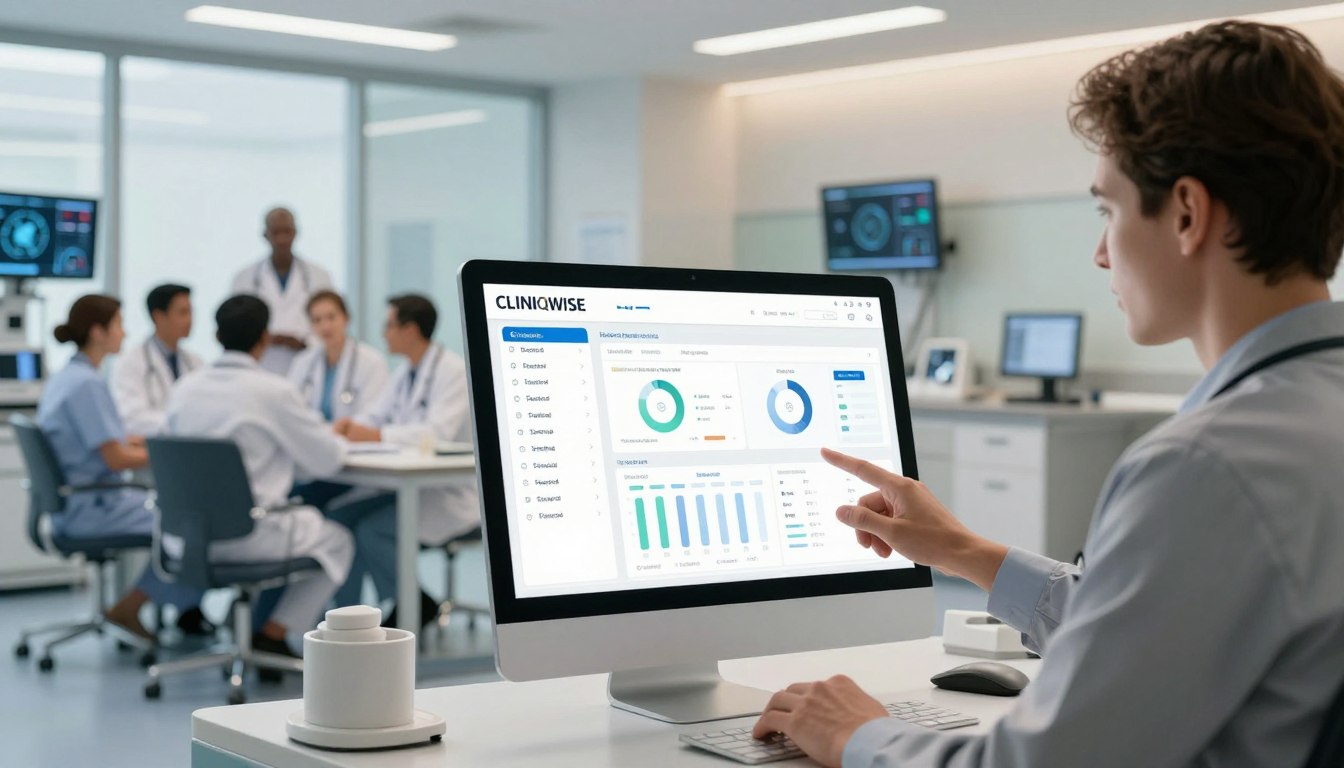
AI-powered hospital management software in India combines hospital workflows such as OPD, IPD, EMR/EHR, billing, pharmacy, laboratory, inventory and reporting with AI-assisted capabilities such as clinical documentation, pattern identification, anomaly detection, operational analytics and workflow intelligence. In 2026, hospitals should distinguish genuine AI capabilities from rule-based automation and standard dashboards. Platforms such as CliniqWise, Oracle Health and Epic offer different approaches to healthcare technology, so hospitals should evaluate AI capabilities, interoperability, security, implementation, scalability and total cost of ownership before choosing a system.
What can AI actually do for a hospital beyond generating reports or answering questions? Modern ai hospital management software in India moves beyond basic digitization. It now supports clinical documentation, workflow automation, and predictive analytics.
These systems improve patient communication and give busy administrators deeper operational insights. Yet many platforms use the term AI loosely for simple rules-based automation or standard dashboards.
This guide compares ten real ai-powered hospital management software in India options available in 2026. We compare real capabilities, not marketing hype, across the ai-powered hospital management system in India market. We help doctors and IT decision-makers choose the right ai hospital management system for their facility.
Key Takeaways
Distinguish be
tween true machine learning capabilities and basic automated workflows in an
ai hospital software in India
.
Evaluate how an
ai hims
can reduce administrative burdens for Indian healthcare staff.
Understand the importance of data integration when selecting an
ai-powered hms
for your hospital.
Review deployment models and pricing structures for
ai hospital management system
solutions.
Focus on clinical accuracy and patient data security when implementing an
ai hms
.
How the 2026 AI Hospital Software Shortlist Was Built
Choosing software for an Indian hospital means separating real innovation from standard digital tools. This framework identifies capable platforms for 2026.
What qualifies as hospital management software in this comparison
Each platform must work as a complete ai-powered hims. It must manage patient data from registration through discharge and billing. Systems handling only appointments or basic pharmacy inventory were excluded.
The software must use one architecture that connects clinical, administrative, and financial departments. This connection helps any ai healthcare software india solution serve modern clinical settings.
How genuine AI differs from rules, workflows, analytics, and standard modules
Artificial intelligence in hospital management uses machine learning models that improve over time, unlike static "if-then" rules. It also differs from simple workflow triggers.
Automated email reminders and dashboard charts are deterministic tools, not intelligent systems. In contrast, ai hospital automation software uses predictive models for clinical decisions and operational forecasts. True ai in hospital management learns from historical data to provide useful insights.
Evidence standards for product claims, integrations, certifications, customers, and pricing
This shortlist uses verifiable evidence instead of marketing brochures. Every ai-powered healthcare software provider had to support claims with case studies and active customer references.
We prioritized platforms with certifications such as ISO or HIPAA compliance. We also tested integrations with national systems like ABDM. Clear pricing was required for inclusion.
Evaluation criteria for Indian doctors, hospital owners, administrators, and IT teams
Each stakeholder has different needs when choosing ai healthcare management software. Doctors value clinical accuracy and ease of use, while owners seek returns and efficiency.
Doctors:
Focus on clinical decision support and reduced documentation time.
Owners:
Focus on revenue cycle management and cost reduction.
Administrators:
Focus on patient flow and resource optimization.
IT Teams:
Focus on interoperability, security, and system scalability.
By balancing these needs, this list offers a complete view of leading tools for India’s healthcare market.
Top AI Hospital Management Software in India: Comparison at a Glance
Indian healthcare facilities must separate basic automation from advanced intelligence when choosing software partners. Using ai for hospitals requires a clear view of how platforms manage clinical and administrative data. This overview helps decision-makers find systems with real innovation, not standard digital workflows.
Comparison table for hospital size, core modules, AI maturity, deployment, integrations, and pricing approach
The following table outlines key features of leading platforms. It shows how these systems support ai hospital operations across different facility sizes.
Platform Type | Core Modules | AI Maturity | Deployment | Pricing Model |
Enterprise HIS | Full Suite | High (Predictive) | Hybrid/Cloud | Quotation-based |
Clinic/SME | OPD/Billing | Low (Rule-based) | Cloud | Subscription |
Specialty | EMR/Lab | Medium (Analytics) | On-premises | Perpetual/License |
OPD, IPD, EMR/EHR, billing, pharmacy, laboratory, inventory, appointments, and patient communication coverage
Complete ai hospital administration software must connect every department smoothly. Essential modules include:
Clinical:
OPD, IPD, and robust EMR/EHR systems.
Operational:
Pharmacy, laboratory, and inventory management.
Administrative:
Billing, appointment scheduling, and patient communication tools.
AI capabilities versus rule-based automation, dashboards, predictive analytics, and conventional software
Many vendors promote ai hospital erp software by calling simple rules artificial intelligence. True AI goes beyond static dashboards and basic alerts. It uses machine learning to predict patient needs and resource demands.
Cloud, on-premises, hybrid, subscription, quotation-based, and open-source deployment considerations
Choosing the right ai hospital information system depends on your infrastructure needs. Cloud models offer growth, while on-premises systems provide full data control. Hybrid models often suit large hospitals needing flexibility and strong security.
How to interpret “AI-powered” claims without treating every automation feature as artificial intelligence
When evaluating an ai his, seek evidence of machine learning, not only automated triggers. A system using preset rules is likely standard automation. Genuine intelligence should learn from data patterns over time.
Always check whether ai emr software india providers share clear algorithm documentation. Request case studies showing how their software improves clinical outcomes through predictive analytics. Separating marketing claims from useful features is the first step toward successful digital transformation.
Enterprise and Multi-Specialty Platforms for Large Indian Hospitals
Large healthcare facilities in India need strong digital systems for complex clinical and administrative work. Choosing the right ai ehr software india platform requires enterprise-grade scalability and multi-specialty support. Leaders must separate standard hospital systems from true AI-powered EHR solutions with clear clinical value.
CliniqWise Hospital Management Software
Overview: CliniqWise is a cloud-based hospital management system developed by Tridev Technologies for Indian clinics, nursing homes and hospitals. It brings OPD, IPD, EMR/EHR, billing, pharmacy, laboratory, inventory, reporting and hospital administration into one connected platform.
AI-assisted clinical and EMR intelligence: CliniqWise can use structured information available in EMR records, diagnoses and clinical data to identify disease- or diagnosis-related patterns and surface relevant information for clinicians. The system should be described as AI-assisted decision support, not as an autonomous diagnostic system. AI outputs should support clinician review rather than replace clinical judgment.
Voice-to-prescription: CliniqWise supports voice-based prescription/documentation workflows, allowing doctors to use voice input to reduce manual typing while preparing prescriptions and clinical records. Describe this as voice-assisted documentation/prescription functionality rather than claiming that AI independently diagnoses or prescribes treatment.
AI-assisted reporting and anomaly detection: CliniqWise can apply intelligence across hospital reports and operational data to identify unusual, inconsistent or potentially incorrect entries that may require review. This can include identifying anomalies in reports, operational patterns or data inconsistencies that might otherwise be missed during manual checking. Do not claim that every detected issue is automatically a fraud, error or compliance violation.
Hospital-wide AI monitoring: Rather than limiting AI to a chatbot, CliniqWise can use AI-assisted analysis across different hospital workflows to surface information that may require management attention. Examples include operational anomalies, documentation gaps, reporting inconsistencies and other patterns that can potentially affect hospital quality and compliance processes.
NABH-oriented alerts and quality monitoring: CliniqWise can use hospital data and workflow information to identify issues that may require attention from hospital management and quality teams, including areas relevant to NABH-oriented processes. These should be described as alerts, risk indicators and review points, not as a guarantee of NABH accreditation or rating improvement.
NHCX and claims workflow: CliniqWise supports workflows related to NHCX/insurance claims, including claim-related processing and information required during the claims journey. Do not state that CliniqWise guarantees claim approval. Instead, explain that the system is designed to help hospitals manage and submit the required claim information and workflows more systematically.
Automation and communication: CliniqWise also supports workflow automation such as follow-up reminders and WhatsApp-based delivery of prescriptions, bills and reports under the hospital's own communication identity.
Best suited for: Indian clinics, nursing homes and small to mid-sized hospitals that want an integrated cloud HMS with OPD, IPD, EMR, billing, pharmacy, laboratory, inventory, reporting and emerging AI-assisted intelligence in one system.
Important distinction: Clearly separate CliniqWise's AI-assisted capabilities from conventional automation. Voice input, WhatsApp delivery, reminders and workflow triggers should not automatically be labelled as AI. Use terms such as AI-assisted analysis, anomaly detection, pattern identification, clinical decision support and intelligent monitoring only where the capability is actually supported.
Attune HealthCare Platform
Overview: hospital information management, c linical workflows, and suitability for multi-specialty organizations
Attune offers a broad suite for large hospital networks. It streamlines clinical workflows across departments and supports efficient operations.
Features: EMR/EHR, OPD, IPD, billing, pharmacy, laboratory, inventory, reporting, access controls, and audit trails to verify
The platform includes patient management, pharmacy, and laboratory modules. It also provides role-based access controls and detailed audit trails for compliance.
AI and automation: separate documented AI, workflow automation, analytics, decision support, and standard HIS functionality
Users should confirm which tools are genuine AI medical software India features and which use standard rules. The system offers workflow automation and data-based analytics for decision support.
Pros: enterprise workflow coverage, interoperability potential, and scalability to confirm through official documentation
Its strengths include broad hospital coverage and support for growing multi-specialty organizations. Interoperability can help connect the platform with outside systems.
Cons: implementation complexity, configuration effort, integration dependencies, and quotation-based pricing considerations
Large deployments may require extensive configuration. Buyers should expect quotation-based pricing based on their specific needs.
Recommendations: hospitals that should evaluate Attune and questions to ask during a product demonstration
Large hospitals seeking one unified platform should evaluate Attune. During demonstrations, ask about the ai clinical documentation software roadmap and integration options.
eClinicalWorks Hospital Information System
Overview: cloud-oriented hospital and healthcare management capabilities for hospitals and healthcare networks
eClinicalWorks uses a cloud-native approach to manage healthcare networks. It supports digital transformation for modern Indian hospitals.
Features: patient administration, clinical records, revenue cycle, diagnostics, pharmacy, inventory, dashboards, and communication modules to verify
The system supports the patient journey from registration through discharge. Integrated dashboards provide real-time views of hospital performance.
AI and automation: identify any officially documented AI assistants, predictive analytics, bots, claims automation, and rules-based workflows
The platform uses rules-based workflows to reduce manual work. Buyers should confirm specific ai medical assistant hospital features during procurement.
Pros: breadth of digital health modules, integration scope, and centralized reporting potential
eClinicalWorks provides a wide range of digital health modules. Centralized reports help administrators understand hospital operations.
Cons: validate module availability, customization limits, data migration requirements, and performance at the proposed scale
Buyers must confirm that needed modules fit their facility size. Moving data from older systems requires careful planning and technical support.
Recommendations: suitable evaluation scenarios for growing hospital groups and digitally connected facilities
Growing hospital groups seeking cloud-based agility may find this platform suitable. It can connect multiple locations under one digital system.
Medixcel Healthcare Information Management System
Overview: hospital information and clinical management use cases for Indian healthcare providers
Medixcel provides a structured way to manage clinical and administrative data. It serves the varied needs of Indian healthcare providers.
Features: OPD, IPD, EMR, billing, laboratory, pharmacy, inventory, appointments, reporting, role-based access, and audit logs to verify
The system supports appointment scheduling and electronic medical records. Role-based access and audit logs help protect data integrity.
AI and automation: distinguish documented AI features from automated reminders, templates, dashboards, and configurable rules
Users should separate configurable rules from ai-powered emr capabilities. Templates and reminders help medical staff manage daily tasks.
Pros: potential fit for integrated hospital operations and configurable administrative workflows
Medixcel offers strong configuration for hospitals with unique needs. It supports connected workflows across departments.
Cons: confirm current AI functionality, interoperability standards, deployment options, support coverage, and total cost
Prospective users should confirm its current ai medical documentation features. They should compare total ownership costs with support and deployment needs.
Recommendations: hospitals that need a broad HIS assessment rather than an AI feature alone
Hospitals seeking a stable information system should consider Medixcel. It suits organizations that value consistent operations over experimental features.
Bahmni
Overview: open-source hospital and laboratory information platform and its relevance to resource-conscious Indian facilities
Bahmni is an open-source solution for hospitals with specific technical needs. Its modular design offers significant flexibility.
Features: patient registration, clinical records, appointments, billing, pharmacy, stock, laboratory, reporting, and user permissions to verify by release
The platform helps manage patient data, pharmacy, and stock. Users should verify features for their specific release version.
AI and automation: clarify that open-source workflow functionality and reporting are not automatically AI capabilities
Bahmni’s reporting is not the same as ai voice to text for doctors. Organizations needing advanced intelligence must add custom AI integrations.
Pros: open-source flexibility, local customization potential, and possible control over hosting and data architecture
Its main benefit is customization for local needs. Hospitals keep more control over data architecture and hosting.
Cons: technical ownership, implementation partner dependence, maintenance, upgrades, security hardening, and integration effort
Technical ownership requires a skilled internal IT team or trusted partner. Hospitals remain responsible for maintenance and security hardening.
Recommendations: organizations with internal IT or a capable implementation partner
Bahmni suits organizations with the skills to manage open-source software. It also helps hospitals avoid vendor lock-in.
NIC eHospital
Overview: government-developed hospital information system and its relevance to public-sector and institutional hospitals
NIC eHospital is a standardized platform for government-run facilities. It provides a reliable framework for public healthcare delivery.
Features: registration, appointments, OPD, IPD, clinical documentation, billing, laboratory, pharmacy, reports, user roles, and auditability to verify from NIC documentation
The system covers core functions needed by public institutions. It emphasizes auditability and standard reporting across government health networks.
AI and automation: distinguish digitized government workflows and reporting from separately documented AI functionality
Although highly digital, the system differs from modern ai-powered ehr platforms. Users should confirm whether their deployment includes specific AI modules.
Pros: public-sector orientation, standardized workflows, and potential relevance to government health facilities
Its government alignment makes it suitable for public hospitals. It supports consistent data collection and reporting across institutions.
Cons: deployment eligibility, local implementation, integration, support model, customization, and current release capabilities require confirmation
Deployment depends on government eligibility rules. Customization is often more limited than in private enterprise systems.
Recommendations: government and institutional buyers that must align procurement with official NIC requirements
This platform is a leading choice for government institutions. Buyers should work with NIC representatives and follow official procurement guidelines.
Platform | Primary Focus | Deployment | AI Maturity |
Attune | Enterprise/Multi-Specialty | Cloud/On-Premise | Moderate |
eClinicalWorks | Cloud-Native/Network | Cloud | Emerging |
Medixcel | Integrated Operations | Hybrid | Basic |
Bahmni | Open-Source/Custom | On-Premise | Customizable |
NIC eHospital | Public Sector | Institutional | Low |
Cloud, Clinic, Diagnostics, and Ambulatory Platforms
Healthcare providers in India often struggle to separate basic automation from true artificial intelligence when choosing software. Many vendors say their systems are “AI-powered,” but most use rule-based workflows instead of machine learning. Choose a platform by checking whether it fits your facility, from a small nursing home to a large diagnostic network.
Oracle Health
Overview: cloud-based hospital management use cases for clinics, nursing homes, and small to mid-sized hospitals
Oracle Health provides a cloud-based solution for facilities needing quick deployment. It serves as robust ai patient management software for nursing homes and clinics digitizing operations.
Features: OPD, IPD, appointments, EMR, billing, pharmacy, laboratory, inventory, patient communication, dashboards, and access controls to verify
The platform covers hospital operations, including pharmacy and laboratory management. It also uses ai whatsapp automation healthcare to improve patient engagement and reduce missed appointments.
AI and automation: assess whether current features are AI, configurable workflow rules, automated reminders, or ordinary digital records
Users should check whether “AI” features predict outcomes or simply send automated reminders. Most current tools improve workflows rather than provide advanced clinical decision support.
Pros: possible fit for smaller facilities seeking a broad operational system and faster cloud deployment
The system can scale for single-facility setups. Its cloud-native architecture provides easy access from anywhere, helping busy administrators.
Cons: validate advanced clinical depth, customization, data export, offline resilience, support SLAs, and scaling beyond a single facility
Larger hospitals may find customization limited compared with enterprise-grade ERPs. Check offline capabilities to maintain service during internet outages.
Recommendations: questions for clinics, nursing homes, and hospitals with approximately 50 or 100 beds
Ask about data export policies and the depth of clinical EMR modules. Confirm that the system can handle your patient volume before committing.
Altera Digital Health Sunrise
Overview: practice and clinic management platform for outpatient, specialty, and multi-location healthcare operations
Altera Digital Health Sunrise manages outpatient workflows across multiple locations. Clinics may consider it for an ai medical scribe india solution that reduces documentation time.
Features: appointments, patient records, billing, prescriptions, reminders, communication, reports, user roles, and integrations to verify
The platform provides strong tools for patient records and billing. It simplifies daily tasks for front-desk staff and clinicians.
AI and automation: distinguish scheduling automation, templates, reminders, and analytics from AI-generated documentation or clinical decision support
The system automates routine tasks, but users should confirm whether it provides clinical decision support. Most features focus on template-based documentation.
Pros: potential fit for outpatient practices and organizations prioritizing appointment and patient-management workflows
The interface is intuitive, so staff can adopt it easily. It suits specialty clinics that need detailed patient history tracking.
Cons: assess IPD, hospital-bed, inpatient billing, laboratory, pharmacy, and enterprise integration depth before purchase
Clinicea is not designed for inpatient hospital management. It lacks the bed management and pharmacy modules required by full-scale hospitals.
Recommendations: outpatient clinics and smaller healthcare businesses that do not require a full inpatient HIS
Choose this platform when outpatient efficiency is your main goal. It suits clinics that value patient experience and accurate records.
NextGen Healthcare
Overview: hospital and clinic management software for Indian providers with configurable administrative and clinical workflows
NextGen Healthcare offers flexible tools for administrative control and clinical work. It is often marketed as an ai prescription software solution for modern practitioners.
Features: OPD, IPD, EMR, billing, pharmacy, laboratory, inventory, appointments, reporting, role-based access, and audit trails to verify
The software includes pharmacy and laboratory management modules. It also provides ai hospital analytics to help owners track financial performance.
AI and automation: record only officially supported AI features and label standard reminders, reports, and workflow triggers accurately
Verify its specific AI capabilities because many features use standard workflow triggers. Confirm that reports offer useful insights instead of only raw data.
Pros: potential coverage for small and mid-sized hospitals seeking an integrated hospital ERP or HIS
The system is configurable, allowing hospitals to tailor workflows. It supports both OPD and IPD operations effectively.
Cons: confirm current deployment model, integration APIs, implementation resources, mobile access, support, and pricing terms
Implementation may be complex because of its customization options. Confirm that the vendor provides training and support during the transition.
Recommendations: facilities comparing all-in-one systems with modular or quotation-based purchasing
This system suits hospitals seeking one integrated platform. It manages clinical and administrative data in one place.
India-Specific Interoperability, Compliance, and Data Protection Requirements
Modern hospital management systems must digitize records and fit India's evolving digital health infrastructure. Choosing a platform requires knowledge of local rules for lasting success.
ABDM, ABHA, and FHIR readiness
Verify ABDM ecosystem participation, ABHA-linked workflows, consent management, Health Information Exchange and Consent Manager compatibility, and FHIR implementation
The Ayushman Bharat Digital Mission (ABDM) supports India's digital health ecosystem. Hospitals must support ABHA-linked workflows for smooth patient identification and record sharing.
True interoperability depends on FHIR (Fast Healthcare Interoperability Resources) standards. Administrators should confirm Health Information Exchange (HIE) support and strong consent management.
NHCX, insurance, and PM-JAY workflows
Check claims, preauthorization, discharge, package, coding, document, and status workflows instead of assuming every billing module supports NHCX or PM-JAY
National Health Claims Exchange (NHCX) integration is vital for hospitals handling insurance and PM-JAY cases. Standard billing software may not support these complex national workflows.
Decision-makers must confirm the software handles preauthorization, electronic discharge summaries, and standardized coding natively. This helps hospitals prevent manual errors and lower claim rejection rates.
For more details visit -: PMJAY-NHCX-DIGITAL-CLAIM-GUIDE
WhatsApp, SMS, email, and patient communication controls
Assess official WhatsApp Business integration, consent, templates, opt-outs, message logs, multilingual support, and escalation to staff
Patient communication is vital to a smart hospital management system. Official WhatsApp Business integration enables secure, automated appointment and report updates.
Hospitals must ensure the platform provides clear opt-out mechanisms and detailed message logs. Multilingual support helps patients across Indian states receive clear information.
Security, privacy, and auditability
Review encryption, backups, breach response, access reviews, role-based permissions, audit trails, retention, data residency, contracts, and applicable Indian legal requirements
Data protection is essential in healthcare. A secure platform needs role-based access controls and audit trails for every interaction with sensitive patient data.
With ai-powered hospital analytics and an ai hospital dashboard, administrators can monitor security compliance in real time. This turns ai business intelligence hospital data into useful security insights.
Hospitals can use ai operational analytics and ai revenue analytics hospital to improve performance while maintaining strict data residency. Effective ai hospital workflow automation builds compliance into clinical and administrative work. This creates a truly intelligent hospital management system.
Compliance Feature | Requirement Level | Verification Method |
ABDM/ABHA Integration | Mandatory | Check Sandbox Certification |
NHCX/PM-JAY Support | High | Test End-to-End Claims Flow |
Data Encryption | Critical | Review Security Audit Reports |
Audit Trails | Mandatory | Verify User Activity Logs |
PMJAY, NHCX & NABH Integrated Hospital Management Software
Get 30% Discount if you purchase PMJAY, NHCX & NABH Integrated Hospital Management Software from here
How to Test AI Claims and Hospital Workflow Automation
Testing smart hospital software in India requires a strict framework for AI claims. Many vendors call standard automation artificial intelligence, which can cause poor investment decisions. Administrators comparing smart hospital software india must separate machine learning models from rule-based workflows and confirm their value.
Clinical documentation, voice-to-text, and medical scribe claims
Effective ai healthcare automation india depends on accurate data entry. Hospitals should perform a thorough ai hospital management software comparison to test regional accents and complex medical terms.
Test transcription accuracy, medical terminology, language support, human review, consent, correction history, and whether outputs enter the legal medical record
Verify that the system allows for a mandatory human review before any note is finalized.
Check if the software maintains a detailed
correction history
to track how clinicians modify AI-generated text.
Ensure that patient consent is captured digitally before any voice-to-text processing begins.
Confirm that the final output is clearly marked as "AI-assisted" within the legal medical record.
Predictive analytics and operational intelligence
True predictive power goes beyond displaying historical data. When reviewing ai hospital management software pricing, ensure the platform offers useful insights instead of static charts. This matters especially for ai hospital software for small hospitals that must use resources wisely.
Separate bed occupancy prediction, demand forecasting, patient-flow analysis, revenue analytics, and doctor dashboards from descriptive reports
Descriptive reports only show what happened in the past. In contrast, predictive models should estimate future bed availability and patient inflow. Ask vendors to show the data sets used to train their forecasting algorithms.
Patient chatbots, virtual assistants, and automated follow-ups
Modern ai hospital software for clinics often uses virtual assistants for routine questions. Test whether these tools recognize intent and quickly send urgent issues to human staff.
Evaluate intent recognition, escalation, clinical safety boundaries, appointment rules, language coverage, WhatsApp behavior, and conversation audit logs
A best ai hospital management software india solution should set strict safety boundaries against medical advice from chatbots. Verify that every interaction appears in an audit trail for quality checks. Also, test the bot with multilingual queries common in India.
Claims, discharge summaries, certificates, and prescription assistance
Automating administrative tasks can save time, but it needs careful oversight. When analyzing ai hospital software pricing, confirm whether the system uses generative AI or simple templates.
Confirm whether content is generated by AI, selected from templates, or produced through deterministic rules, and require clinician approval where appropriate
Deterministic rules are often safer for certificates and standard discharge summaries. If the system uses generative AI, it must require clinician approval for every document. This keeps the final output accurate and legally compliant with local medical standards.
Core Modules Every Hospital Management System Should Cover
Every successful hospital, from small nursing homes to large multi-specialty centers, needs key modules for quality care. When reviewing ai hospital software for nursing homes, administrators must ensure the system handles basic patient flows without extra complexity. A simple system lets small teams focus on patient outcomes instead of software maintenance.
A growing facility, such as an ai hospital software for 50 bed hospital, needs better resource use. These facilities need linked modules that prevent data silos between front-desk and clinical staff. At this scale, efficiency can separate profitable operations from those with high administrative costs.
Larger institutions seeking ai hospital software for 100 bed hospital setups need scalable systems. These systems support complex departmental interactions and high patient volumes. Choosing the right ai hospital management software 2026 ensures the facility remains compliant and competitive in a changing digital landscape.
Patient administration from appointment to discharge
Assess registration, queue management, OPD, admission, bed allocation, transfer, discharge, follow-up, and referral workflows
The patient journey begins with efficient registration and queue management. Modern ai healthcare software 2026 simplifies these tasks by automating appointment scheduling and reducing wait times. Seamless transitions between the outpatient department (OPD) and inpatient department (IPD) are critical for high patient satisfaction.
Effective ai-powered opd management allows doctors to view patient history instantly upon arrival. This reduces time spent on manual data entry and supports better face-to-face interaction. Automated follow-up reminders help patients follow treatment plans after leaving the facility.
Clinical records and care-team coordination
Review EMR/EHR structure, notes, orders, results, prescriptions, nursing documentation, consent, allergies, and longitudinal patient history
A centralized Electronic Medical Record (EMR) system provides one trusted record for the care team. It must capture initial nursing notes and complex surgical consents. Longitudinal patient history is essential for accurate diagnoses and preventing medication errors.
By implementing ai-powered ipd management, hospitals can better track patient vitals and treatment progress in real time. This coordination keeps every care-team member informed. It also supports compliance with medical documentation standards.
Financial, pharmacy, laboratory, and inventory operations
Test billing, packages, discounts, deposits, refunds, insurance, pharmacy dispensing, lab orders, stock levels, purchase orders, and expiry controls
Financial stability depends on accurate billing and inventory management. An integrated system should handle insurance claims, package discounts, and patient deposits without manual errors. Ai-powered billing features can reduce lost revenue by flagging discrepancies before final invoices are created.
Inventory control is vital for pharmacy and laboratory operations. The software must track stock levels and alert staff about expiring medications. This prevents waste and keeps essential supplies available for patient care.
Reporting, dashboards, roles, and audit trails
Check statutory, operational, clinical, financial, and custom reports with role-based access, immutable logs, exports, and scheduled delivery
Data-driven decision-making requires clear dashboards and strong reporting tools. Administrators should generate statutory and financial reports in a few clicks. Role-based access ensures sensitive patient data stays secure while staff complete their duties.
Finally, immutable audit trails are essential for security and accountability. Every system action must be logged to prevent unauthorized changes. This transparency supports internal audits and regulatory requirements in the Indian healthcare sector.
Total Cost of Ownership and Pricing Models in India
Hospital technology requires a clear view of long-term costs beyond the purchase price. Administrators should assess how pricing models affect budgets over several years. Strategic planning helps the platform remain affordable as the facility grows.
Subscription, per-user, per-bed, per-transaction, perpetual-license, and quotation-based pricing
Vendors in India offer pricing models for hospitals of different sizes. Subscription plans provide predictable monthly or yearly costs, while per-bed and per-user plans match facility capacity. Transaction fees may suit high-volume services, including ai-powered pharmacy management and ai-powered laboratory management.
Require a written price breakdown for software, modules, users, facilities, storage, APIs, messaging, devices, and AI usage
Request a clear, itemized quote before signing any contract. The quote should list costs for modules such as ai-powered inventory management and ai-powered patient records. Check for hidden fees for API access, SMS messaging, or ai-powered appointment scheduling.
Implementation and integration costs
The setup phase often requires major one-time spending. These costs cover technical work that matches the software to each hospital's workflows. Good integration helps the system connect with external health networks.
Budget for configuration, ABDM or FHIR connections, laboratory and imaging interfaces, payment gateways, WhatsApp, insurance, NHCX, and data migration
Include the technical work needed to connect with national health frameworks like ABDM. Also budget for ai-powered queue management systems and payment gateways. Include the cost of moving legacy data into the new system.
Recurring operational costs
Operating costs continue after the system launches. These fees help maintain the health and security of your digital infrastructure. Reliable support and regular updates protect your investment over time.
Include hosting, backups, security, support tiers, upgrades, training refreshers, custom reports, hardware, downtime procedures, and exit costs
Ongoing costs include cloud hosting, data backups, and cybersecurity. Also budget for ai-generated medical documentation updates and refresher training. Consider data extraction costs if you later change vendors.
Financial comparison for small, medium, and enterprise hospitals
Comparing platforms only by starting price can produce inaccurate budgets. Review total ownership costs over three to five years. This method shows the value of tools like ai-powered follow-up reminders.
Compare three- to five-year total cost rather than selecting a platform from its advertised starting price
The table shows how hospitals of different sizes may view costs over five years. It helps decision-makers choose a pricing model that supports long-term financial goals.
Looking for a Smooth Hospital Software Implementation?
Experience how Cliniqwise simplifies hospital onboarding with free Excel data migration, 1-screen doctor EMR, and native ABDM M1–M3 compliance. Explore live OPD, IPD, and billing workflows tailored for Indian hospitals with zero downtime.
Hospital Size | Primary Pricing Driver | Key Cost Focus | 5-Year Financial Outlook |
Small Clinic | Per-User/Subscription | Basic modules & support | Low initial, predictable growth |
Medium Hospital | Per-Bed/Module | Integrations & AI features | Moderate, scalable investment |
Enterprise Group | Quotation/Enterprise License | Customization & API usage | High initial, optimized efficiency |
Implementation, Migration, Training, and Scalability Plan
Successful digital transformation in Indian hospitals needs a careful implementation and migration strategy. A clear roadmap helps technology improve patient care without creating operational bottlenecks. With a phased approach, administrators can add ai-assisted clinical documentation and ai-generated reports to daily routines.
Preimplementation discovery and workflow mapping
Document current OPD, IPD, pharmacy, laboratory, billing, inventory, claims, reporting, and approval workflows before configuration
Before installing software, teams must map each current process. This discovery phase finds gaps that the new system must address. Clear documentation prevents setup errors and helps the software meet hospital needs.
Data migration and validation
Define source ownership, data cleansing, patient matching, duplicate handling, historical records, test migration, reconciliation, and rollback procedures
Data integrity supports a reliable ai hospital management dashboard. Hospitals must clean legacy data so ai decision support tools work accurately. A strong migration plan includes these critical steps:
Source Ownership:
Clearly define who manages data extraction from legacy systems.
Patient Matching:
Use unique identifiers to prevent duplicate records.
Reconciliation:
Verify that migrated data matches the original source records.
Rollback Procedures:
Maintain a contingency plan to revert to legacy systems if critical errors occur.
Pilot, go-live, and clinical safety controls
Run a department pilot, parallel validation, role-based training, super-user support, downtime drills, issue tracking, and post-go-live review
A phased go-live plan lowers risks to patient safety. One department lets staff build confidence while receiving ai operational insights. During this phase, hospitals should use regular predictive analytics in hospitals to track performance and find bottlenecks.
"The transition to digital health systems is not merely a technical upgrade; it is a fundamental shift in how care teams coordinate and deliver patient outcomes."
Scalability and vendor support
Test additional beds, departments, facilities, users, transactions, integrations, languages, analytics workloads, and support response times
Scalability testing shows whether the platform can grow with the hospital. Administrators must test increased predictive hospital analytics and hospital demand forecasting as patient volume rises. The table below lists key scalability performance indicators:
Metric | Target | Frequency |
System Latency | < 2 seconds | Daily |
Concurrent Users | 100% capacity | Monthly |
Support Response | < 4 hours | On-demand |
Finally, vendor support remains vital for long-term success. Hospitals should choose partners offering 24/7 assistance and regular software updates. This keeps the system compliant with changing Indian healthcare regulations and technological standards.
Hospital Software Buying Checklist for Indian Decision-Makers
Choosing hospital management software requires a careful review of technical and daily operating needs. Administrators should prioritize hospital workflow automation so digital tools ease staff work without adding complexity. A structured review helps match the platform to an Indian healthcare facility's needs.
Product and AI due diligence
Request a live demonstration using real workflows, a current feature matrix, AI model descriptions, human-review controls, limitations, release notes, and official evidence
Decision-makers should request a live demonstration that matches their daily work. Test bed occupancy prediction and patient flow prediction in a real-world setting. Ask for AI model details and clear human-review controls that help prevent clinical errors.
Interoperability and compliance due diligence
Ask for ABDM, ABHA, FHIR, NHCX, PM-JAY, laboratory, radiology, payment, accounting, WhatsApp, SMS, and API documentation where relevant
Modern Indian hospitals must meet national standards. Confirm support for ABDM and ABHA, which enable smooth patient data exchange. Also request API documentation for existing laboratory and radiology equipment.
Contract, security, and data ownership due diligence
Review service levels, uptime, incident response, encryption, backups, audit logs, subcontractors, data export, retention, termination, and breach obligations
Security should lead every contract negotiation. Hospitals should strictly define data ownership and require accessible, unchangeable audit logs. Review the vendor's incident response plan to protect patient data from unauthorized access.
Operational and financial due diligence
Obtain implementation timelines, staffing assumptions, training plans, migration scope, support channels, upgrade policy, customization rates, and five-year TCO
Understanding total cost of ownership (TCO) supports long-term financial planning. Assess whether the standard package includes hospital revenue analytics and doctor performance analytics. Ensure the contract includes all training and migration costs to prevent hidden fees.
Reference checks and acceptance testing
Speak with comparable hospitals, verify claimed deployments independently, and define measurable acceptance criteria before signing
Before signing, speak with hospitals that use the platform. Use independent feedback to assess automated hospital reports and real-time hospital analytics. Finally, test ai claims automation during a trial period against your billing needs.
Evaluation Category | Key Metric | Priority Level |
Clinical Efficiency | Workflow Automation | High |
Financial Health | Revenue Analytics | High |
Regulatory | ABDM/ABHA Compliance | Critical |
Technical | API/Interoperability | Medium |
Conclusion
Modernizing hospital operations requires verified technology, not marketing buzz. Indian healthcare providers should choose platforms that improve clinical and administrative efficiency. Tools like ai insurance claims processing and automated ai discharge summary generation reduce staff workloads.
Decision-makers should choose systems with ai medical certificate generation for faster patient documentation. A reliable ai patient chatbot or sophisticated ai healthcare chatbot can improve front-desk interactions. These tools act as an ai virtual assistant for hospitals and answer patient queries quickly.
Implementing an ai hospital receptionist or an ai voice assistant for doctors requires careful checks of data security and ABDM compliance. Hospitals must demand performance evidence before signing long-term contracts. Success requires software that solves specific operational bottlenecks and follows Indian data protection standards.
The best path forward requires rigorous acceptance testing and measurable outcomes. By prioritizing interoperability and clinical safety, administrators can build a resilient digital ecosystem. Proven AI maturity keeps technology a long-term asset for patient care and hospital growth.
Looking for an Enterprise Solution?
Discover how Cliniqwise helps clinics & hospitals automate workflows, reduce errors, and streamline patient care.
Frequently Asked Questions
What AI capabilities does CliniqWise offer for hospitals in India?
CliniqWise combines hospital management workflows with AI-assisted analysis across EMR and operational data. Its use cases include identifying disease- and diagnosis-related patterns from available EMR information, voice-assisted prescription and clinical documentation, detecting unusual or inconsistent information in hospital reports, and surfacing operational issues that may require management review. CliniqWise can also use hospital-wide data to identify potential quality and compliance issues that may be relevant to NABH-oriented monitoring. These capabilities are designed to support doctors and hospital teams; they do not replace clinical judgment or guarantee NABH accreditation, claim approval, or a particular clinical outcome.
How does CliniqWise compare with global platforms such as Epic and Oracle Health?
CliniqWise, Epic, and Oracle Health address different segments of the healthcare technology market. Epic and Oracle Health are large enterprise healthcare platforms with extensive EHR and hospital capabilities, while CliniqWise focuses on cloud-based hospital management for Indian clinics, nursing homes, and small to mid-sized hospitals. CliniqWise also places emphasis on India-specific workflows such as ABDM, ABHA, NHCX-related workflows, WhatsApp communication, EMR-based intelligence, reporting, and hospital operations. Hospitals should compare platforms based on facility size, required modules, integrations, AI capabilities, implementation requirements, support, and total cost of ownership rather than brand name alone.
Is CliniqWise an AI-powered hospital management system?
CliniqWise combines conventional HMS functionality with AI-assisted intelligence and automation. Its core hospital modules include OPD, IPD, EMR/EHR, billing, pharmacy, laboratory, inventory and reporting, while intelligent capabilities can analyse available hospital data to surface patterns, anomalies, reporting issues and potential areas requiring attention. Its voice-assisted prescription workflow can also reduce repetitive documentation work. The platform should not be described as an autonomous diagnostic or treatment system; AI-generated insights are intended for human review and decision support.
What defines the best AI hospital management software India for large-scale multi-specialty facilities?
For large organizations, the best ai hospital management software india needs enterprise resource planning (ERP). It must integrate OPD, IPD, and specialized clinical workflows. Attune HealthCare and KareXpert handle high patient volumes and provide ai-powered hospital analytics. Predictive hospital analytics forecast bed occupancy and demand, helping networks optimize resources across multiple locations.
How does genuine artificial intelligence in hospital management differ from standard rules-based automation?
Distinguish artificial intelligence in hospital management from deterministic, rules-based workflows. Standard ai hms may trigger appointments or reminders; true systems use machine learning for patient flow and ai-generated medical documentation. Unlike if-then software, it learns from historical data, providing ai decision support and intelligent hospital management system insights.
Are there specific ai hospital software for small hospitals or nursing homes with limited beds?
Yes, specialized solutions serve smaller facilities. MocDoc and SoftClinic are prominent examples of ai hospital software for small hospitals, 50 bed hospital, and nursing homes. Cloud-based, easy-to-use platforms offer modular ai-powered billing and ai-powered pharmacy management, keeping pricing manageable below 100 beds.
What are the essential compliance standards for an ai hospital information system in India by 2026?
ABDM (Ayushman Bharat Digital Mission) should guide every ai hospital information system, or ai his, in India by 2026. Systems need ABHA integration, FHIR data standards, and Health Information Exchange and Consent Manager participation. They should support NHCX for ai claims automation and PM-JAY workflows, ensuring insurance processing and regulatory compliance.
How can ai medical scribe india technology improve clinical documentation for doctors?
An ai medical scribe india uses ai voice to text for doctors, turning consultations into structured clinical notes. This ai clinical documentation software reduces administrative work, letting physicians focus on care while capturing compliant records without typing. Leading ai emr software india and ai ehr software india providers add ai-assisted documentation, ai-generated reports, and ai patient records.
What role does ai whatsapp automation healthcare play in patient communication?
Ai whatsapp automation healthcare is a smart hospital software india tool that improves the patient journey. These tools automate ai appointment management, ai-powered reminders, and ai-powered queue updates. This 24/7 ai patient communication acts as an ai hospital receptionist, improving engagement and reducing front-desk work.
How is ai-powered hospital analytics used for revenue and operational management?
Ai-powered hospital analytics gives an ai hospital dashboard insights into hospital revenue analytics and doctor performance analytics. Ai business intelligence hospital tools and ai hospital erp software provide real-time hospital analytics, revealing bottlenecks in ai hospital operations. These ai operational insights improve financial planning by exposing leakage in ai-powered laboratory management and inefficiencies in ai-powered inventory management.
Can open-source platforms like Bahmni be considered ai-powered healthcare software?
Bahmni is a powerful open-source hospital and laboratory information platform used by many resource-conscious facilities in India. Its core uses workflow automation, but ai healthcare automation india tools can make it an ai-powered hms. Users should distinguish standard modules from custom ai medical assistant hospital features; IT teams or partners may implement ai for hospitals.
What should be included in a 5-year total cost of ownership (TCO) for ai hospital management software pricing?
When evaluating ai hospital management software pricing, Indian decision-makers should look beyond initial subscription or per-bed fees. A complete five-year TCO includes implementation, data migration, ABDM/FHIR integration, WhatsApp API, hardware upgrades, and recurring support charges. Ai hospital erp costs also include ai medical documentation fees and staff training for full smart hospital management system use.
How can ai claims automation and NHCX readiness speed up insurance reimbursements?
Ai claims automation uses ai-powered billing engines to check documentation against insurance rules before submission. It reduces rejections and speeds ai insurance claims processing through the NHCX gateway. Ai hospital software india generates an ai discharge summary, organizes ai medical documentation, supports cash flow, and reduces manual follow-ups.