Top 10 Clinic Management Software in India for Doctors and Clinics in 2026
Compare the top 10 clinic management software in India for 2026, led by CliniqWise, with features, INR pricing, ABDM status, pros and cons.

Quick Answer
The best clinic management software helps doctors manage appointments, patient records, consultations, prescriptions and billing in one place. CliniqWise offers OPD management, online appointment booking, queue management, EMR/EHR, WhatsApp automation, voice-to-EMR and customisable clinical fields. Doctors should compare features, pricing, reporting, support and ABDM integration before choosing software for their clinic.
A doctor loses consultation time switching between patient notes, appointment details, and billing tasks. Clinic management software in India can bring those daily tasks together, but the right choice depends on how the clinic works.
This comparison places CliniqWise by Tridev Technologies first, followed by nine alternatives. Product fit depends on practice size, specialty, workflow, budget, support, and integration needs. The ratings are editorial scores, not customer ratings or measured performance results.
Each clinic has different demands. A solo doctor may need a simple appointment and records flow, while a larger team may need doctor-wise schedules and role-based access. This guide helps clinics compare options without assuming one product suits every practice.
The first step is to identify the clinic’s daily workflow requirements before comparing products. That keeps the shortlist focused on work the team actually does, rather than a long feature list.
Key Takeaways
Match the software to the clinic’s size and daily patient flow.
Separate confirmed features from claims that need a live test.
Compare the subscription price with setup, messaging, and support costs.
Check patient-record access, export, privacy, and ABDM workflows.
Use a tailored demo or pilot before moving all clinic records.
Which workflows should Indian clinics expect software to handle?
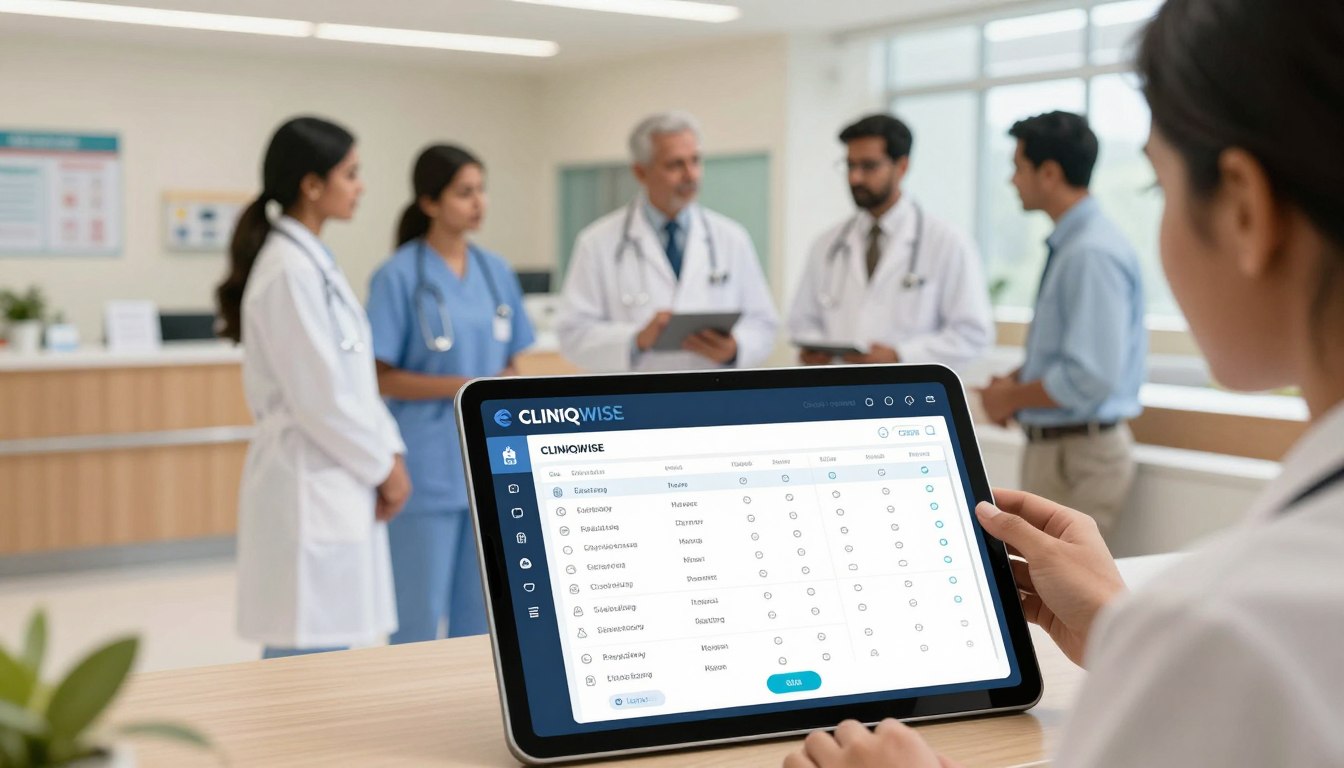
The right system should carry a patient from an appointment or walk-in through consultation, payment, and follow-up. Connected steps reduce repeated entry and help the front desk track patient flow.
Clinics should test the full visit, not just appointment booking. Token management is the process of assigning patients a queue number and tracking their order for consultation.
Test one complete visit, from booking or walk-in to consultation, payment, and follow-up.
Clinic management software should link appointments, check-in, consultation notes, prescriptions, billing, follow-up, and reports. A single-doctor practice may focus on a clear schedule, quick records, and simple billing.
A multi-doctor practice also needs doctor-wise schedules and role-based access. Those controls help staff see the tasks and patient details needed for their role.
Practice pattern | Workflow pressure | Must-test task | Scope boundary |
Solo practice | Appointments and billing | Record a visit and collect payment | Outpatient care |
Small clinic | Walk-ins and follow-up | Track tokens and reminders | Outpatient care |
Polyclinic | Multiple doctors and schedules | Switch doctors and roles | Outpatient departments |
Hospital | Admissions and departments | Track beds and lab requests | Inpatient and outpatient care |
OPD software centers on outpatient visits. Hospital management software may also cover inpatient admissions, beds, pharmacy, and laboratory workflows.
A search for the top 10 hospital management software in India calls for broader inpatient and departmental coverage than an OPD clinic shortlist. The two categories overlap, but their scope differs.
Before comparing tools, clinics can map four core processes:
Booking and walk-ins
Consultation and records
Billing and collections
Follow-up and reports
That map gives the team a consistent basis for comparing clinic management systems and their evidence.
How should clinics compare clinic management software in India?

Choosing the right clinic management software in India requires comparing the features that directly improve everyday clinical workflows. Doctors should evaluate OPD management, appointment booking, patient queue management, EMR/EHR documentation, digital prescriptions, billing, WhatsApp automation, reporting, customisation and ABDM integration.
Our comparison considers these practical capabilities alongside pricing, usability and suitability for different clinic sizes. The editorial ratings reflect our assessment of each product’s relevance to Indian clinics, not customer-review scores or an official industry ranking.
CliniqWise by Tridev Technologies is placed first in this comparison, followed by other clinic management software options available to Indian healthcare providers. The goal is to help doctors understand the available choices and identify software suited to their practice.
Product | Verified feature set | INR subscription price | ABDM status |
CliniqWise by Tridev Technologies | OPD, queue management, WhatsApp automation, booking, EMR/EHR, voice-to-EMR, stylus notes, custom fields, reports and 15+ specialty templates | Starts from 10,000/Year | ABDM Certified |
pappyjoe | appointment views, notifications, token management, listed clinical codes | Not publicly confirmed | ABDM Certified |
Easy Clinic | India compliance roadmap includes ABDM, ABHA, and the Digital Personal Data Protection Act 2023 | Starts from 1499/month | In progress, per its stated roadmap |
Dochours | Appointments, walk-ins, consultations, billing, records, online booking, SMS and email reminders | Starts from 1250/month | No |
Which other clinic management software options should you compare?
Indian doctors can choose from several clinic management platforms, ranging from basic appointment and patient-record tools to systems with integrated OPD workflows, digital prescriptions, billing and patient communication.
The following comparison includes Clinicia, DrPage, QweeClin, Sushro and Appointik as additional options for independent doctors and smaller clinics. Their published features and pricing are presented alongside CliniqWise to help readers compare different approaches to clinic digitisation.
Product | Verified Feature Set | INR Subscription Price | ABDM Status |
|---|---|---|---|
Clinicia | Appointment booking, patient records, EMR, e-prescriptions, billing, queue management and reports | ₹7,000/year Standard; ₹8,500/year Premium, as listed on its website | Not verified |
DrPage | Doctor website, online appointment booking, patient register, digital prescriptions and multi-clinic dashboard | ₹299/month Basic; ₹499/month Premium; ₹4,990/year annual plan, plus GST | Not verified |
QweeClin | OPD, appointments, billing, pharmacy and laboratory workflows, as advertised | Plans advertised from ₹99/month; verify current plan details | Not verified |
Sushro | Appointment scheduling, patient records, prescriptions, billing, queue management and WhatsApp reminders | ₹9,990/year Solo; ₹19,990/year Practice, plus GST | Not verified |
Appointik | Features require confirmation from official product documentation | Not publicly confirmed | Not Publicly Listed |
Each clinic management platform offers a different combination of features, pricing and workflows. While some focus on appointment scheduling and patient records, others provide broader capabilities for OPD management, billing, patient communication and clinical documentation.
For clinics evaluating advanced workflows, features such as queue management, WhatsApp automation, online appointment booking, voice-to-EMR, stylus-based documentation and customisable clinical fields can make a meaningful difference in daily operations. ABDM integration and reporting capabilities are also important considerations for Indian healthcare providers.
The right choice depends on the clinic’s specialty, patient volume, documentation needs, budget and preferred workflow. Comparing these capabilities helps doctors identify a system that fits their practice today while supporting future growth.
Let's take a closer look at how CliniqWise by Tridev Technologies brings these clinic management workflows together in one platform.
What does CliniqWise by Tridev Technologies offer clinics?
CliniqWise is a cloud-based clinic and hospital management platform developed by Tridev Technologies for Indian healthcare providers. It brings together OPD management, patient registration, queue management, appointment booking, EMR/EHR documentation, billing, reporting and patient communication in one integrated system.
Designed around practical Indian clinic workflows, CliniqWise combines website and WhatsApp appointment booking with WhatsApp automation, helping clinics manage patient communication alongside their daily operations.
Its clinical documentation capabilities include voice-to-EMR, stylus-based writing workflows and customisable EMR fields. These options help doctors adapt documentation to their specialty and preferred way of working rather than relying on a single rigid template.
CliniqWise also offers reporting and analytics for clinic operations and supports ABDM-related digital health workflows. Together, these capabilities make it relevant for independent practitioners, growing OPD clinics and multispecialty healthcare facilities looking for a connected digital workflow.
How do its OPD and booking tools fit daily visits?
For a practical test, staff can enter one appointment and one walk-in. They can then confirm whether each patient appears in the right order for consultation.
The doctor should check whether the queue view provides the details needed to begin a visit. The front desk should test how staff update a booking when a patient arrives late.
WhatsApp automation is listed, but the clinic should test what messages it supports. It should not assume that every reminder or patient reply is automated.
What documentation and reporting features should doctors test?
EMR/EHR, voice-to-EMR, stylus documentation, and custom fields relate to how doctors record consultations. The doctor should record a sample visit using each method they expect to use.
Custom clinical fields should match the clinic’s notes, and voice entry should be checked for accuracy. A stylus test can show whether handwritten notes fit the doctor’s normal pace.
The team should also open reports and check which views are available. Integration, security certification, ease of use, and specialty support are not established by the listed features alone.
A live test shows whether these tools fit the clinic’s real work and where an alternative may suit it better.
How do the nine alternatives differ by clinic type?
The best alternative depends on whether the clinic’s main constraint is documentation, scheduling, patient access, or operational breadth. Its actual bottleneck should guide the shortlist.
A small clinic's software shortlist should prioritise essential workflows without the cost and complexity of unnecessary hospital-level features. The right choice depends on the clinic's specialty, patient volume, documentation needs and daily operations.
Clinics that require structured clinical documentation should look for specialty-specific templates, flexible appointment scheduling and customisable consultation notes. A practical demo should show how the software handles real patient visits, follow-ups, prescriptions and reporting within the clinic's existing workflow.
Which clinic management software is worth considering for specialty workflows?
When comparing clinic management software in India, doctors should look beyond appointment booking and patient records. Features such as OPD management, queue and token management, digital prescriptions, customisable EMR fields, billing, WhatsApp reminders and specialty-specific documentation can make everyday clinic operations easier.
CliniqWise brings together OPD workflows, online appointment booking, WhatsApp automation, EMR/EHR, voice-to-EMR, stylus-based clinical documentation, customisable fields and reporting. Clinicia, DrPage, QweeClin, Sushro and Appointik are other options to explore, depending on the clinic’s size, budget and requirements.
Before choosing a clinic management system, ask for a live demo using your actual consultation workflow. Check how easily the software handles patient registration, appointments, queue management, prescriptions, follow-ups and reports. Also confirm the available features in your chosen plan, pricing, and whether ABDM integration meets your clinic’s requirements.
Which clinic management software suits patient records and easy access?
For clinics looking to simplify daily operations, clinic management software should connect appointment booking, patient records, consultations, billing and follow-ups in one workflow. Online booking and automated reminders can also help patients access services more conveniently.
CliniqWise combines website and WhatsApp appointment booking with EMR/EHR tools and OPD management workflows. Other options in this comparison, including Clinicia, DrPage, QweeClin, Sushro and Appointik, are worth exploring based on the clinic’s requirements, budget and preferred features.
Before making a decision, request a demo and check how the software handles patient registration, consultation history, digital prescriptions, follow-up visits and reporting. Clinics should also confirm whether online booking, patient communication tools and required record-management features are included in their selected plan.
What should teams verify before treating a feature as a strength?
Teams should confirm the feature in their intended plan and account setup. They should also check whether the feature works with their staff roles, patient records, and daily schedule.
Easy Clinic’s ABDM and ABHA workflows are described as in progress. That status should not be treated as a live capability for a clinic.
A closer look at the subscription and any free option can show whether the product fits the clinic’s budget.
What do clinic software prices and free options include?
The total cost depends on included users, modules, and services, not just the displayed subscription price. Added services can change what a clinic pays over time.
Clinics should compare the full quote, including setup and ongoing charges. Subscription prices may depend on the number of doctors, locations, modules, integrations, messaging use, onboarding, and billing period.
A time-limited free trial ends after a set period. A permanently free plan has ongoing limits or conditions, while downloadable or self-hosted software may require local setup and maintenance.
The phrase clinic management software free can refer to very different offers. Anyone comparing free clinic management software in India should check record export, user limits, support, data retention, and upgrade terms.
For clinic management software price comparisons, request current INR quotes with matching users and services. A lower subscription may not include migration or message charges.
Which costs should clinics compare beyond the subscription?
Clinics can ask for written answers to four quote questions:
How many users and branches does the quote cover?
Are onboarding or migration charges included?
Do messaging or integration services add charges?
What are the renewal and cancellation terms?
What is the difference between a free plan and a free trial?
A trial gives temporary access, while a free plan may remain available with limits. Neither label explains what happens to patient records after access ends.
Clinics should find out whether they can export records and how long the vendor retains data. They should also check what happens when the clinic adds users or moves to a paid plan.
Once costs are clear, patient data and Indian digital health integration deserve closer attention.
What should clinics verify about ABDM, privacy, and patient data?
An integration label does not establish which ABDM tasks are available in a clinic’s account. Specific workflows matter more than a general claim.
Clinics should distinguish live, limited, in-progress, and unconfirmed ABDM functions. A demo should show whether the clinic can use the digital health tasks it needs in its own setup.
Easy Clinic describes its ABDM and ABHA workflows as in progress. Its India compliance roadmap also includes the Digital Personal Data Protection Act 2023, but that does not mean completed compliance.
What does ABDM integration mean in practice?
Clinics should ask which ABDM functions are live and test them using the intended account. A roadmap statement is different from a working feature in the clinic’s configuration.
A general integration claim does not prove that every ABDM workflow is supported. Clinics should avoid calling a product ABDM-compliant based only on a planned workflow or broad claim.
Which patient-data safeguards deserve a closer check?
Review role-based access, authentication, and auditability. These controls help a clinic limit who can view patient records and track important actions.
Ask how the vendor handles backups, data export, retention, and breach response. The clinic should also clarify who is responsible for patient consent in each workflow.
HIPAA references alone do not establish compliance with Indian law. A clinic must review its own legal duties and the vendor’s written terms separately.
Testing permissions and patient-record handling before rollout can reveal gaps that a feature label will not show.
How can a clinic implement software without disrupting care?
A small staff group can test one appointment-to-payment journey before the clinic moves its full workflow. A limited pilot can expose delays while normal care continues.
Map current clinic operations before configuring the new system. Include appointments, walk-ins, consultation notes, billing, follow-ups, and reports.
Run realistic patient journeys with a few staff members. Include a changed appointment, a walk-in, a consultation, and a payment so the team can spot gaps.
What should the team test during a pilot?
Confirm staff roles, training needs, and the support team’s response process. Test how the system handles common corrections, such as a duplicate record or a changed appointment.
Before switching, agree on data migration and export terms in writing. Review sample records for missing fields, duplicate entries, and formatting problems.
How should staff prepare records and specialty workflows?
Staff should identify which fields they use for each visit type and which records need to move first. A clinic can test a small set before importing a larger record group.
Clinics seeking clinic management software in Kerala can use the same checks as clinics elsewhere in India. Location does not replace a test of the clinic’s own workflow.
Free software for a doctor's clinic still needs checks for support, continuity, data export, and privacy. Free access alone does not show whether the clinic can keep records available.
A final decision checklist can bring workflow fit, written terms, and patient care into one clear test.
What should a clinic confirm before choosing a platform?
A successful real-workflow test and clear written terms should be the final decision gate. Proof in practice matters more than a polished generic demonstration.
A demo should use the clinic’s own patient journey, not a standard sales walkthrough. The team should confirm five points before signing up or moving records:
Choose only after the clinic has tested its real patient journey and received clear written terms.
Workflow fit from booking through follow-up
Specialty documentation and custom clinical fields
Billing steps and the reports the team needs
Patient-data access, retention, and export
Written price, support, and ABDM status
Clinics should confirm who can access records and how they can retrieve them later. The written terms should describe the services included in the selected plan.
The phrase clinic management software free download full version is not a safe assumption. Clinics should use authorized product access and confirm licensing, updates, and data handling.
Before migration, the team should know how records will move and what happens if the clinic changes providers. That decision affects patient care beyond the first billing cycle.
A tailored demo or pilot using the clinic’s own workflow is the practical next step.
Conclusion
Demonstrated workflow fit matters more than a long feature list. The right clinic management software should handle the clinic’s real daily work, document its capabilities clearly, and fit its budget and support needs.
CliniqWise leads this comparison, but it is not the universal best choice. Each doctor and clinic team should test how a product handles a real patient visit before moving records.
Book a tailored demo and bring the clinic’s appointment, consultation, and billing workflow to test.
Looking for an Enterprise Solution?
Discover how Cliniqwise helps clinics & hospitals automate workflows, reduce errors, and streamline patient care.
Frequently Asked Questions
What are the top 10 EMR systems in India?
The best EMR software in India depends on a clinic’s specialty, patient volume, documentation needs and budget. Options to compare include CliniqWise, MocDoc, PappyJoe, Easy Clinic, Dochours, HealthPlix, Clinicea, DocPulse, Practo Ray and Eka.care. Each platform offers a different combination of patient records, appointment scheduling, digital prescriptions, billing and practice management features. Before choosing, request a demo and confirm the features, pricing, data policies and support available for your clinic.
What are the top 10 hospital management software options in India?
Healthcare providers can compare CliniqWise, MocDoc, PappyJoe, Easy Clinic, Dochours, HealthPlix, Clinicea, DocPulse, Practo Ray and Eka.care based on their operational requirements. However, these platforms do not necessarily offer the same range of hospital management features. Clinics should assess OPD management, appointments, EMR/EHR and billing, while hospitals should also verify inpatient admissions, bed management, pharmacy, laboratory and other departmental workflows before selecting an HMS.
What is the most used software in healthcare?
There is no single healthcare software platform that is the most suitable for every provider, and a verified usage ranking may not be available across all categories. Independent clinics often prioritise appointment booking, OPD management, digital prescriptions and EMR/EHR, while hospitals may need comprehensive hospital management systems. The right choice depends on daily workflows, ease of use, reporting, patient communication and the level of support provided.
How much does clinic management software cost in India?
The cost of clinic management software in India varies according to the number of users, modules, integrations, support and subscription terms. Some providers offer monthly plans, while others charge annually. When comparing options such as CliniqWise, PappyJoe, Easy Clinic and Dochours, clinics should confirm current INR pricing, applicable GST, included features, renewal charges and any additional fees for messaging or customisation. Comparing plans on the same requirements helps doctors assess the overall value.
Can a clinic use free clinic management software?
Yes. Some clinic management platforms may offer free plans or limited trials, depending on their current terms. Before using one for patient records, check user limits, available features, technical support, data export, backup policies and upgrade costs. Clinics should also review privacy and security arrangements before storing patient information in any software.
Does ABDM integration automatically mean software is compliant?
No. An ABDM integration claim does not, by itself, establish that every feature or deployment meets all applicable requirements. Clinics should verify which ABDM workflows are available, whether the relevant integrations have been implemented and validated, and what responsibilities remain with the healthcare provider. Ask the vendor for documentation of the specific integration and clarify any distinction between completed capabilities and features still in progress.
Can clinics migrate existing patient records into new software?
Yes, existing patient records can often be migrated, depending on their format, quality and the software’s import capabilities. Before switching systems, clinics should ask about data migration, field mapping, duplicate handling, record verification and export options. Testing a sample of patient records before the full migration helps ensure that consultation histories, prescriptions and other important information remain accessible.